Showing posts with label Date:0517. Show all posts

Wednesday, December 12, 2012

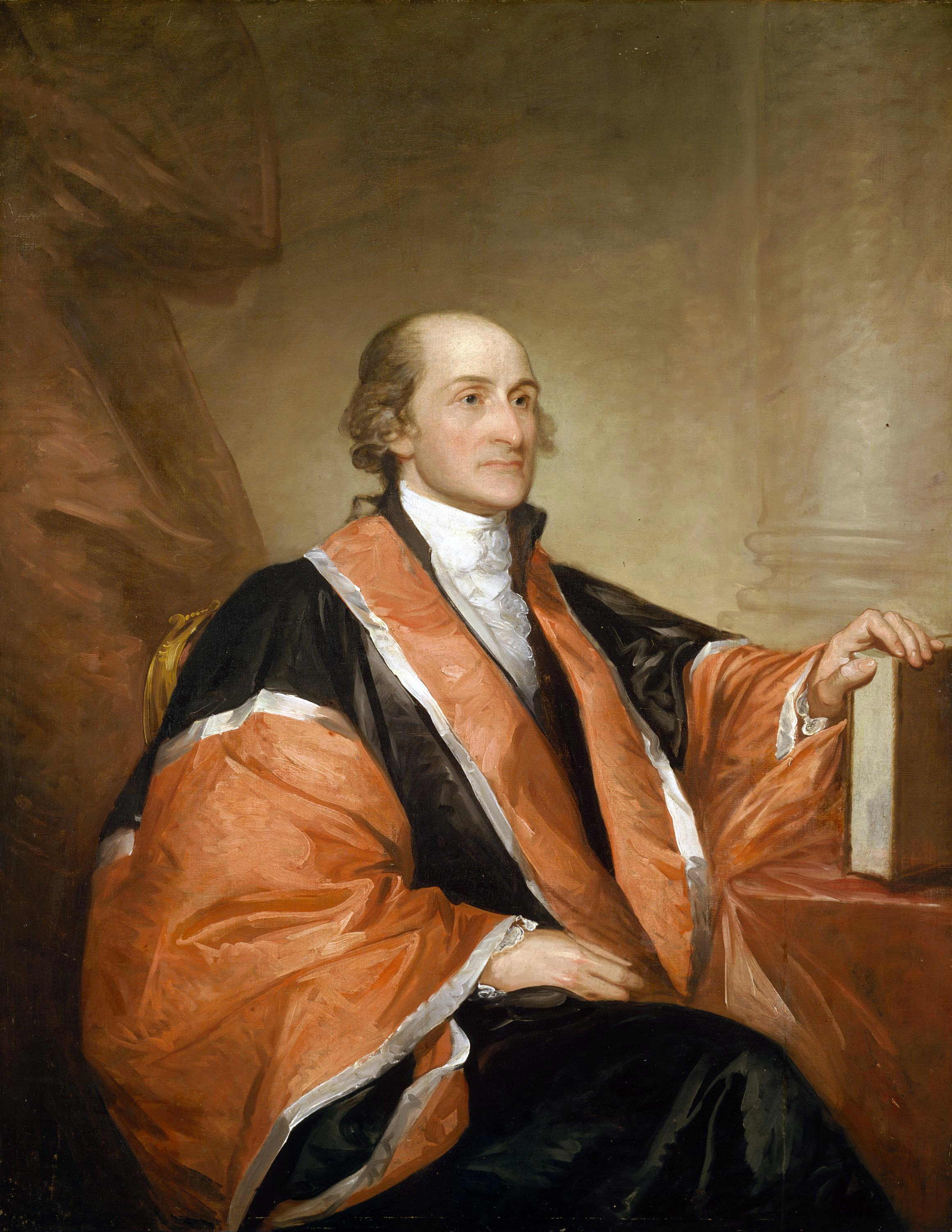
John Jay, signer of the Treaty of Paris (1783)

John Jay (né le 12 décembre 1745 - mort le 17 mai 1829) était un homme de politique, révolutionnaire, diplomate et juriste américain.
Il fut l'auteur des Federalist Papers avec Alexander Hamilton et James Madison, servit en tant que diplomate américain en France et fut le premier Chief Justice, ou président de la Cour suprême.
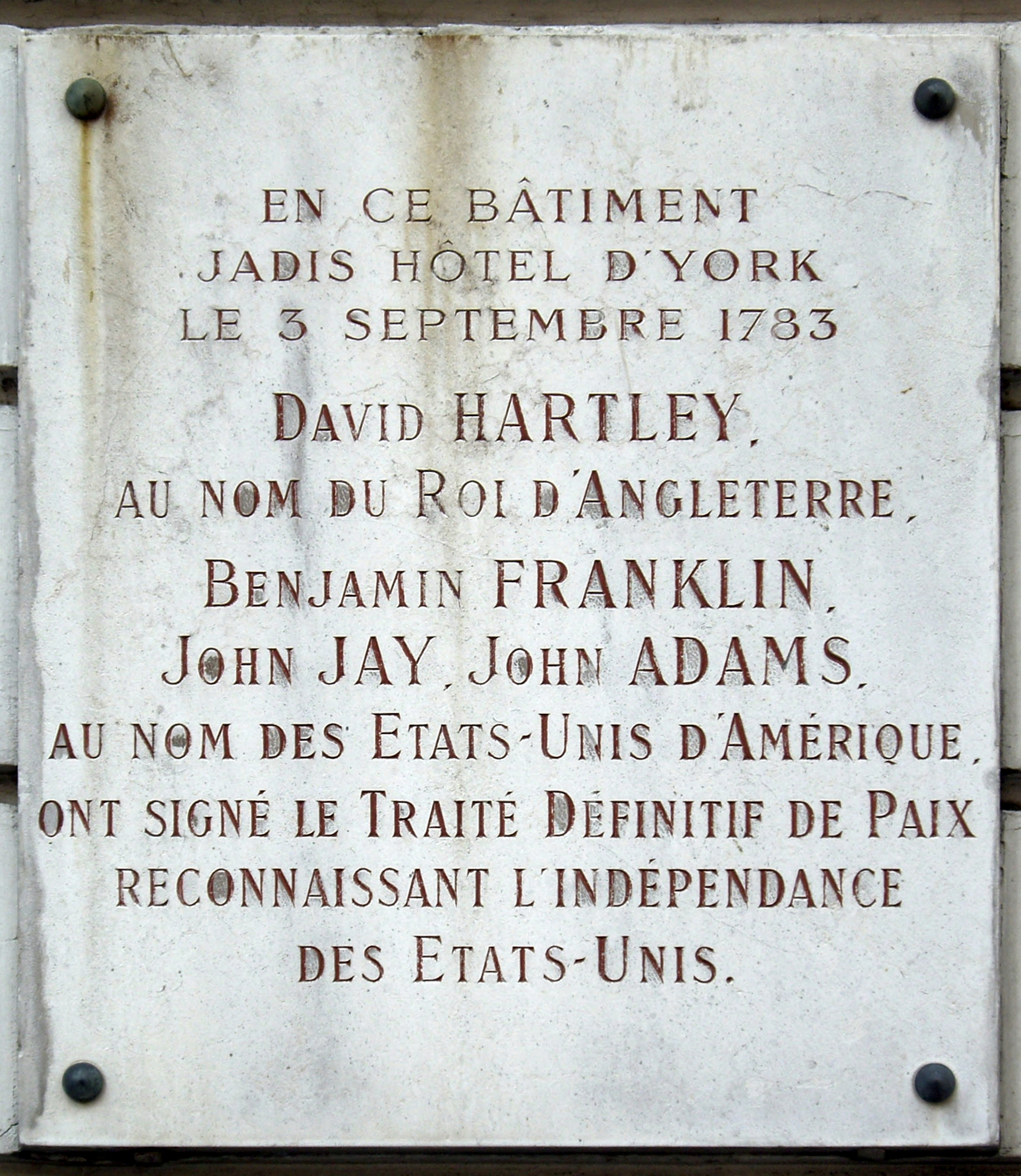
Le 3 septembre 1783, il était l'un des quatre signataires du traité définitif de paix de Paris, reconnaissant l'indépendance des Etats-Unis, avec ses compatriotes Benjamin Franklin, John Jay, John Adams, et l'Anglais David Hartley.
 

John Jay (December 12, 1745 – May 17, 1829) was an American politician, statesman, revolutionary, diplomat, a Founding Father of the United States, and the first Chief Justice of the United States (1789–95).
Jay was one of the three American signatories to the Treaty of Paris, September 3, 1783, which ended the American Revolutionary War between Great Britain on one side and the United States of America and its allies on the other. The two other Americans were Franklin and Adams. The English signatory was David Hartley.
John Jay | John Jay, by Gilbert Stuart, 1794
Plaque: 56, rue Jacob
En ce bâtiment, jadis hôtel d'York, le 3 septembre 1783, David Hartley au nom du roi d'Angleterre, Benjamin Franklin, John Jay, John Adams, au nom des Etats-Unis d'Amérique, ont signé le traité définitif de paix reconnaissant l'indépendance des Etats-Unis.
In this building, on September 3rd, 1783, David Hartley, representing the king of England, and Benjamin Franklin, John Jay, John Adams, representing the United States of America, jointly signed the final peace treaty by which Englad recognized the independance of the United States.

Wikipédia fr:John Jay
Wikipedia En:John Jay
Copyrights: Images hotlinked from Wikipedia Commons retain their licences. All other pictures are CC-BY-NC-SA, Serendiparis, 2001-2012

Thursday, May 17, 2012

Erik Satie

Alfred Eric Leslie Satie, dit Erik Satie, né à Honfleur le 17 mai 1866 et mort à Paris le 1er juillet 1925, est un compositeur et pianiste français. (Wikipédia)
Deux plaques commémorent sa vie et son travail à Paris.

Éric Alfred Leslie Satie (17 May 1866 – Paris, 1 July 1925; signed his name Erik Satie after 1884) was a French composer and pianist. Satie was a colourful figure in the early 20th century Parisian avant-garde. His work was a precursor to later artistic movements such as minimalism, repetitive music, and the Theatre of the Absurd.

An eccentric, Satie was introduced as a "gymnopedist" in 1887, shortly before writing his most famous compositions, the Gymnopédies. Later, he also referred to himself as a "phonometrician" (meaning "someone who measures sounds") preferring this designation to that of a "musician", after having been called "a clumsy but subtle technician" in a book on contemporary French composers published in 1911.[2]

In addition to his body of music, Satie also left a remarkable set of writings, having contributed work for a range of publications, from the dadaist 391 to the American culture chronicle Vanity Fair. Although in later life he prided himself on always publishing his work under his own name, in the late nineteenth century he appears to have used pseudonyms such as Virginie Lebeau and François de Paule in some of his published writings.
(Wikipedia)
Erik Satie
Plaque: 6, rue Cortot
Erik Satie
compositeur de musique
a vécu dans cette maison
de 1890 à 1898
Erik Satie,
composer,
lived in this house
1890-1898
Plaque: 29, rue Campagne Première
Dans l'effervescence créatrice des années 1920 L'hôtel Istria accueillit entre autres artistes Francis Picabia, Marcel Duchamp, Moïse Kisling, peintres; Man Ray, photographe; Kiki de Montparnasse, modèle et égérie; Eric Satie, compositeur; Rainer-Maria Rilke, Tristan Tzara, Vladimir Maïakovski, poètes; et Louis Aragon qui y rejoignait Elsa Triolet.

"Ne s'éteint que ce qui brilla... Lorsque tu descendais de l'hôtel Istria Tout était différent rue Campagne Première, En mil neuf cent vingt neuf, vers l'heure de midi...", Louis Aragon (Il ne m'est Paris que d'Elsa).

Association La Mémoire des Lieux
In the roaring 1920s this hotel Istria hosted numerous artists including Francis Picabia, Marcel Duchamp, Moïse Kisling, painters; Man Ray, photographer; Kiki de Montparnasse, model and égérie; Eric Satie, composer; Rainer-Maria Rilke, Tristan Tzara, Vladimir Maïakovski, poets; and Louis Aragon who joined Elsa Triolet.

"Only what has been bright can fade away… When you used to come to hôtel Istria every thing looked different in street Campagne Première, in nineteen hundred and twenty nine, around noon time…", Louis Aragon (Il ne m'est Paris que d'Elsa).

The Memory of Places Society


Wikipédia fr:Erik Satie
Wikipedia En:Erik Satie
Copyrights: Images hotlinked from Wikipedia Commons retain their licences. All other pictures are CC-BY-NC-SA, Serendiparis, 2001-2012