Showing posts with label Year:1896. Show all posts

Saturday, April 16, 2016

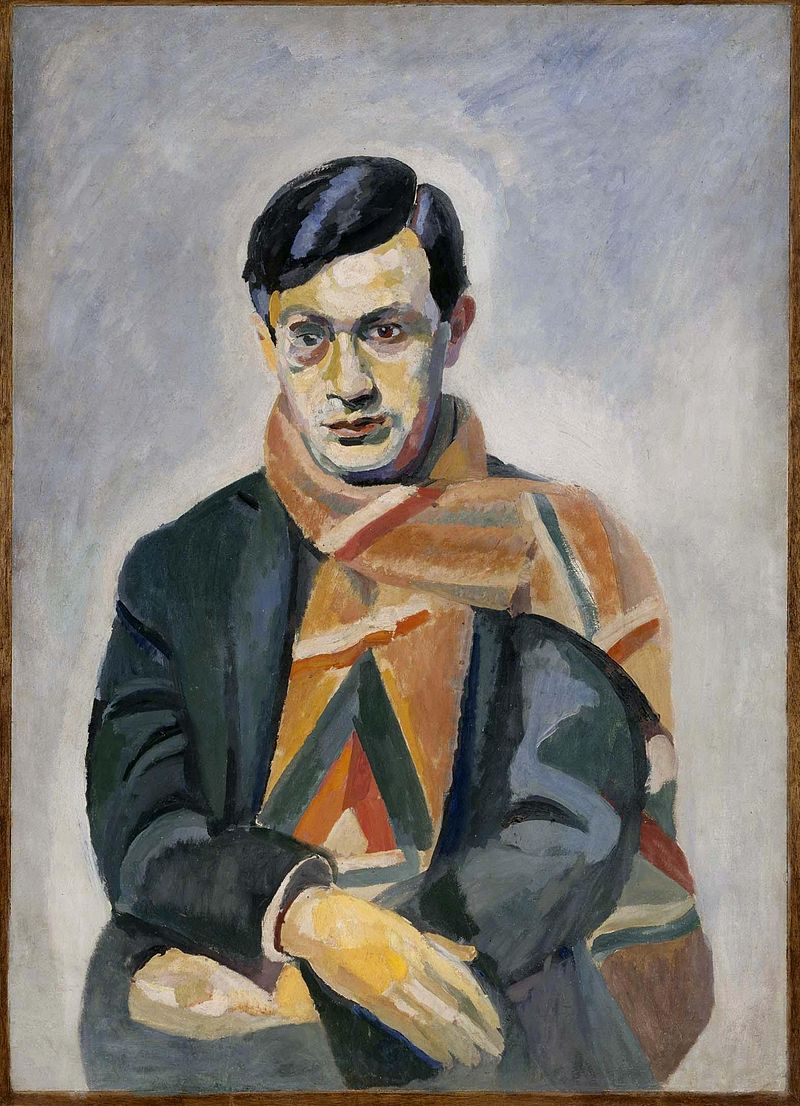
Tristan Tzara, poet and founder of Data, was born today in 1986

Tristan Tzara, né le 16 avril 1896 à Moinesti, Roumanie et mort le 25 décembre 1963 à Paris, est un écrivain, poète et essayiste de langue roumaine et française; il est l'un des fondateurs du mouvement Dada dont il sera par la suite le chef de file.

Tristan Tzara, a Romanian and French avant-garde poet, essayist and performance artist, one of the founders and central figures of the anti-establishment Dada movement, was born in Romania in 1896, moved to Paris in 1911, where he spent most of his life. He died in Paris on Christmas day, 1963. His house in Montmartre was designed by Austrian architect Adolf Loos.     
Tristan Tzara
Tristan Tzara
by Robert Delaunay
Plaque: 29, rue Campagne Première
Dans l'effervescence créatrice des années 1920 L'hôtel Istria accueillit entre autres artistes Francis Picabia, Marcel Duchamp, Moïse Kisling, peintres; Man Ray, photographe; Kiki de Montparnasse, modèle et égérie; Eric Satie, compositeur; Rainer-Maria Rilke, Tristan Tzara, Vladimir Maïakovski, poètes; et Louis Aragon qui y rejoignait Elsa Triolet.

"Ne s'éteint que ce qui brilla... Lorsque tu descendais de l'hôtel Istria Tout était différent rue Campagne Première, En mil neuf cent vingt neuf, vers l'heure de midi...", Louis Aragon (Il ne m'est Paris que d'Elsa).

Association La Mémoire des Lieux

In the roaring 1920s this hotel Istria hosted numerous artists including Francis Picabia, Marcel Duchamp, Moïse Kisling, painters; Man Ray, photographer; Kiki de Montparnasse, model and égérie; Eric Satie, composer; Rainer-Maria Rilke, Tristan Tzara, Vladimir Maïakovski, poets; and Louis Aragon who joined Elsa Triolet.

"Only what has been bright can fade away… When you used to come to hôtel Istria every thing looked different in street Campagne Première, in nineteen hundred and twenty nine, around noon time…", Louis Aragon (Il ne m'est Paris que d'Elsa).

The Memory of Places Society
Plaque: 13, avenue Junot
Maison construite en 1926 par
l'architecte autrichien
Adolf Loos
1870 - 1933
pour l'écrivain Tristan Tzara

House built in 1926 by Austrian architect Adolf Loos (1870-1933) on behalf of writer Tristan Tzara.

Wikipédia fr:Tristan Tzara
Wikipedia En:Tristan Tzara
Copyrights: Images hotlinked from Wikipedia Commons retain their licences. All other pictures are CC-BY-NC-SA, Serendiparis, 2001-2013

Saturday, September 12, 2015

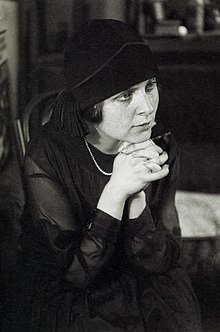
Elsa Triolet, Russian-French writer, was born today in 1896, in Moscow

Elsa Triolet,  née Elsa Kagan, est une femme de lettres d'origine russe née le 12 septembre 1896 à Moscou. Après avoir, à19 ans, connu Maiakovski, elle épouse un offier français en 1918 et le suit à son retour en France. Elle rencontre Louis Aragon en 1928; leur vie commune dure jusqu'au décès d'Elsa, le 16 juin 1970, dans leur propriété de Saint-Arnoult-en-Yvelines. C'est Elsa qui incite Aragon à adhérer au parti communiste, et ils participent ensemble à la Résistance pendant la seconde guerre mondiale. Elsa Triolet est, en 1944, la première femme a obtenir le prix Goncourt.

Elsa Triolet,  née Elsa Kagan, is a French writer of Russian origin. She was born 12 September 1896 in Moscou. She meets Mayakovski, when she is 19. A year later, she marries a French army officer, and follows him when he returns to France, before divorcing. She meets Louis Aragon in 1928; they live together until she dies, 16 June 1970, in their property near Paris. It is Elsa who incites Aragon to join the Communist parti. They take part in the French Resistance. In 1944, she is the first woman to be awarded the prix Goncourt, the most famous prize in French literature.
Elsa Triolet | 1925
Elsa Triolet | 1925
Plaque: 29, rue Campagne Première
Dans l'effervescence créatrice des années 1920 L'hôtel Istria accueillit entre autres artistes Francis Picabia, Marcel Duchamp, Moïse Kisling, peintres; Man Ray, photographe; Kiki de Montparnasse, modèle et égérie; Eric Satie, compositeur; Rainer-Maria Rilke, Tristan Tzara, Vladimir Maïakovski, poètes; et Louis Aragon qui y rejoignait Elsa Triolet.

"Ne s'éteint que ce qui brilla... Lorsque tu descendais de l'hôtel Istria Tout était différent rue Campagne Première, En mil neuf cent vingt neuf, vers l'heure de midi...", Louis Aragon (Il ne m'est Paris que d'Elsa).

Association La Mémoire des Lieux
In the roaring 1920s this hotel Istria hosted numerous artists including Francis Picabia, Marcel Duchamp, Moïse Kisling, painters; Man Ray, photographer; Kiki de Montparnasse, model and égérie; Eric Satie, composer; Rainer-Maria Rilke, Tristan Tzara, Vladimir Maïakovski, poets; and Louis Aragon who joined Elsa Triolet.

"Only what has been bright can fade away… When you used to come to hôtel Istria every thing looked different in street Campagne Première, in nineteen hundred and twenty nine, around noon time…", Louis Aragon (Il ne m'est Paris que d'Elsa).

The Memory of Places Society

Wikipédia fr:Elsa Triolet
Wikipedia En:Elsa Triolet
Copyrights: Images hotlinked from Wikipedia Commons retain their licences. All other pictures are CC-BY-NC-SA, Serendiparis, 2001-2013
Tuesday, June 19, 2012

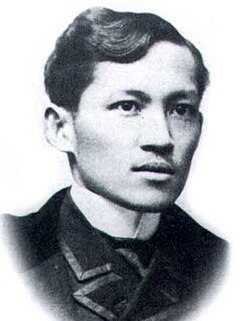
José Rizal

José Rizal, né le 19 juin 1861 à Calamba dans la province de Laguna et fusillé le 30 décembre 1896 à Manille, est le grand héros national des Philippines. Poète et romancier, médecin et chirurgien ophtalmologue, linguiste, il joua un rôle essentiel dans la politique des Philippines et l'émancipation du peuple philippin. Son exécution par les Espagnols en 1896 est l'une des causes de la révolution philippine; le jour anniversaire de cette éxécution est férié aux Philippines.
Rizal a vécu et étudié la médecine à Paris, où quatre plaques portent souvenir de ses séjours entre 1883 et 1891.

José Protacio Rizal Mercado y Alonso Realonda (19 June 1861 – 30 December 1896), was a Filipino polymath, patriot and the most prominent advocate for reform in the Philippines during the Spanish colonial era. He is listed as one of the national heroes of the Philippines. His execution by the Spanish in 1896, a date marked annually as Rizal Day, a Philippine national holiday, was one of the causes of the Philippine Revolution.
Rizal studied medecine in Paris, where four plaques show where he lived and worked between 1883 and 1891.
Jose Rizal
Plaque: 122, rue de Rennes
Philippines Historical Committee 1959
José Rizal
1861 - 1896
héros national des Philippines
vécut dans cette maison en 1883
Philippines Historical Committee 1959
José Rizal
1861 - 1896
National hero of the Philippines
lived here in 1883
Plaque: 55, rue du Cherche Midi
Philippines Historical Committee, 1959. José Rizal, 1861-1896, héros national des Philippines, étudia ici l'ophtalmologie en 1885-1886 avec le Dr. L. De Wecker.
Philippines Historical Committee, 1959. José Rizal, 1861-1896, National hero of the Philippines, studied ophtalmology here in 1885-1886 with Dr. L. De Wecker.
Plaque: 45, rue de Maubeuge
José Rizal, 1861-1896, héros national des Philippines, vécut dans cette maison en 1889. C'est ici qu'il écrivit des livres et des articles qui stimulèrent l'esprit national philippin. Philippines Historical Committee, 1959.
José Rizal, 1861-1896, National hero of the Philippines, lived here in 1889. Here he wrote books and columns that sparked Philippines' national spirit. Philippines Historical Committee, 1959.
Plaque: 4bis, rue de Châteaudun
Ici séjourna en octobre 1891
José Rizal (1861-1896), héros national philippin,
écrivain et médecin.
A l'occasion du centenaire de sa mort le 30 décembre 1896.
José Rizal (1861-1896), National hero of the Philippines,
writer and doctor, lived here in October 1891.
Centenary of his death on 30 December 1896.

Wikipédia fr:Jose Rizal
Wikipedia En:Jose Rizal
Copyrights: Images hotlinked from Wikipedia Commons retain their licences. All other pictures are CC-BY-NC-SA, Serendiparis, 2001-2012