Showing posts with label Theme:Literature. Show all posts

Tuesday, April 11, 2017

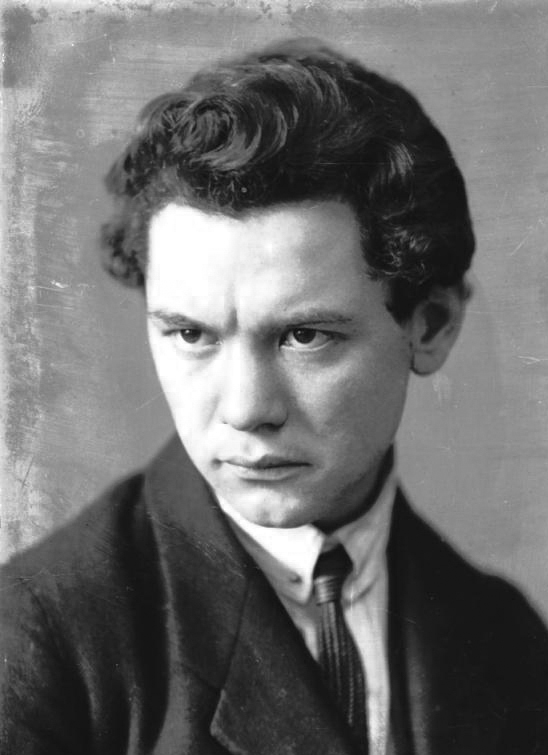
Attila József, Hungarian poet, was born today in 1905.

Attila József (ou József Attila dans l’ordre usuel en hongrois), poète de la révolte, à étudié à la Sorbonne en 1926-1927. Il était né le 11 avril 1905 à Budapest et est mort le 3 décembre 1937 à Balatonszárszó au bord du lac Balaton.


Attila József, Hungarian poet, was born 11 April 1905 in Budapest. With the help of a patron, he acquired a good education in Hungary, Austria (1925) and Paris (1926–27), where he studied French literature and discovered the work of François Villon. He died 3 December 1937 in Balatonszárszó.
Attila Jozsef
Attila Jozsef
Plaque: 6, rue du Vieux Colombier
Dans cette maison
vécut en 1926 le
poète hongrois
Attila Jozsef
(1905-1937)

In this house
lived in 1926
the Hungarian poet
Attila Jozsef
(1905-1937)

Wikipédia fr:Attila József
Wikipedia En:Attila József
Copyrights: Images hotlinked from Wikipedia Commons retain their licences. All other pictures are CC-BY-NC-SA, Serendiparis, 2001-2013

Saturday, April 16, 2016

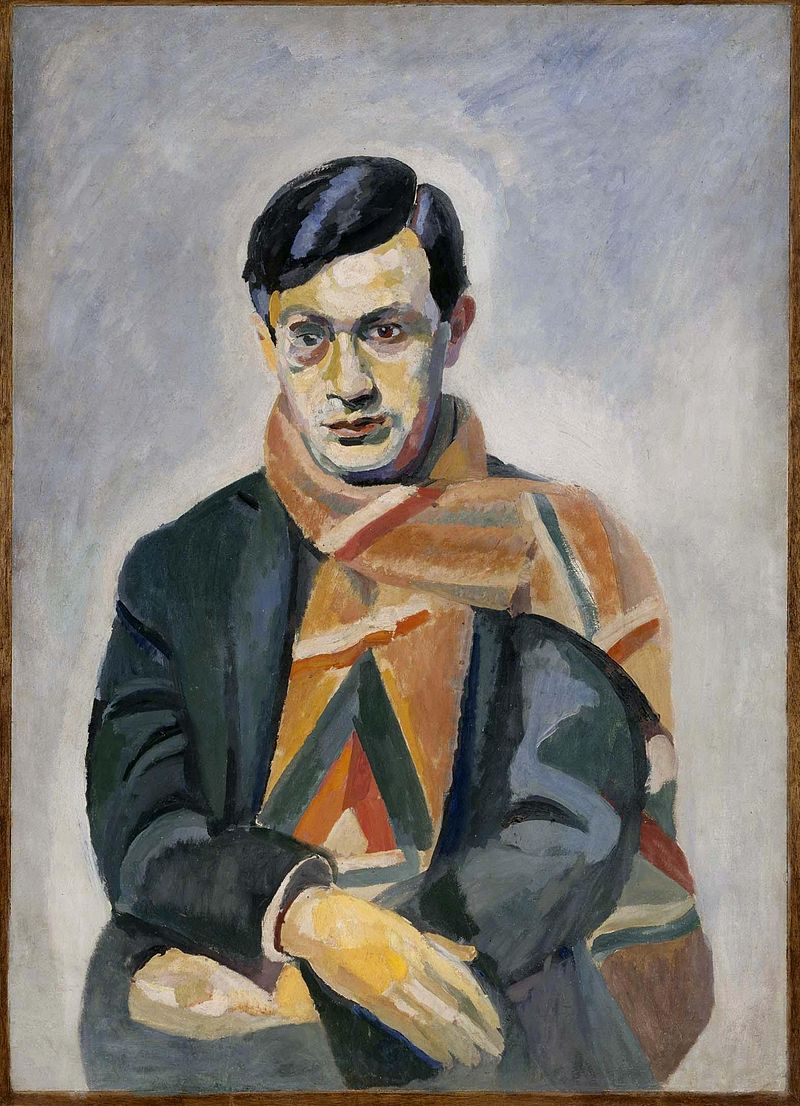
Tristan Tzara, poet and founder of Data, was born today in 1986

Tristan Tzara, né le 16 avril 1896 à Moinesti, Roumanie et mort le 25 décembre 1963 à Paris, est un écrivain, poète et essayiste de langue roumaine et française; il est l'un des fondateurs du mouvement Dada dont il sera par la suite le chef de file.

Tristan Tzara, a Romanian and French avant-garde poet, essayist and performance artist, one of the founders and central figures of the anti-establishment Dada movement, was born in Romania in 1896, moved to Paris in 1911, where he spent most of his life. He died in Paris on Christmas day, 1963. His house in Montmartre was designed by Austrian architect Adolf Loos.     
Tristan Tzara
Tristan Tzara
by Robert Delaunay
Plaque: 29, rue Campagne Première
Dans l'effervescence créatrice des années 1920 L'hôtel Istria accueillit entre autres artistes Francis Picabia, Marcel Duchamp, Moïse Kisling, peintres; Man Ray, photographe; Kiki de Montparnasse, modèle et égérie; Eric Satie, compositeur; Rainer-Maria Rilke, Tristan Tzara, Vladimir Maïakovski, poètes; et Louis Aragon qui y rejoignait Elsa Triolet.

"Ne s'éteint que ce qui brilla... Lorsque tu descendais de l'hôtel Istria Tout était différent rue Campagne Première, En mil neuf cent vingt neuf, vers l'heure de midi...", Louis Aragon (Il ne m'est Paris que d'Elsa).

Association La Mémoire des Lieux

In the roaring 1920s this hotel Istria hosted numerous artists including Francis Picabia, Marcel Duchamp, Moïse Kisling, painters; Man Ray, photographer; Kiki de Montparnasse, model and égérie; Eric Satie, composer; Rainer-Maria Rilke, Tristan Tzara, Vladimir Maïakovski, poets; and Louis Aragon who joined Elsa Triolet.

"Only what has been bright can fade away… When you used to come to hôtel Istria every thing looked different in street Campagne Première, in nineteen hundred and twenty nine, around noon time…", Louis Aragon (Il ne m'est Paris que d'Elsa).

The Memory of Places Society
Plaque: 13, avenue Junot
Maison construite en 1926 par
l'architecte autrichien
Adolf Loos
1870 - 1933
pour l'écrivain Tristan Tzara

House built in 1926 by Austrian architect Adolf Loos (1870-1933) on behalf of writer Tristan Tzara.

Wikipédia fr:Tristan Tzara
Wikipedia En:Tristan Tzara
Copyrights: Images hotlinked from Wikipedia Commons retain their licences. All other pictures are CC-BY-NC-SA, Serendiparis, 2001-2013

Saturday, January 9, 2016

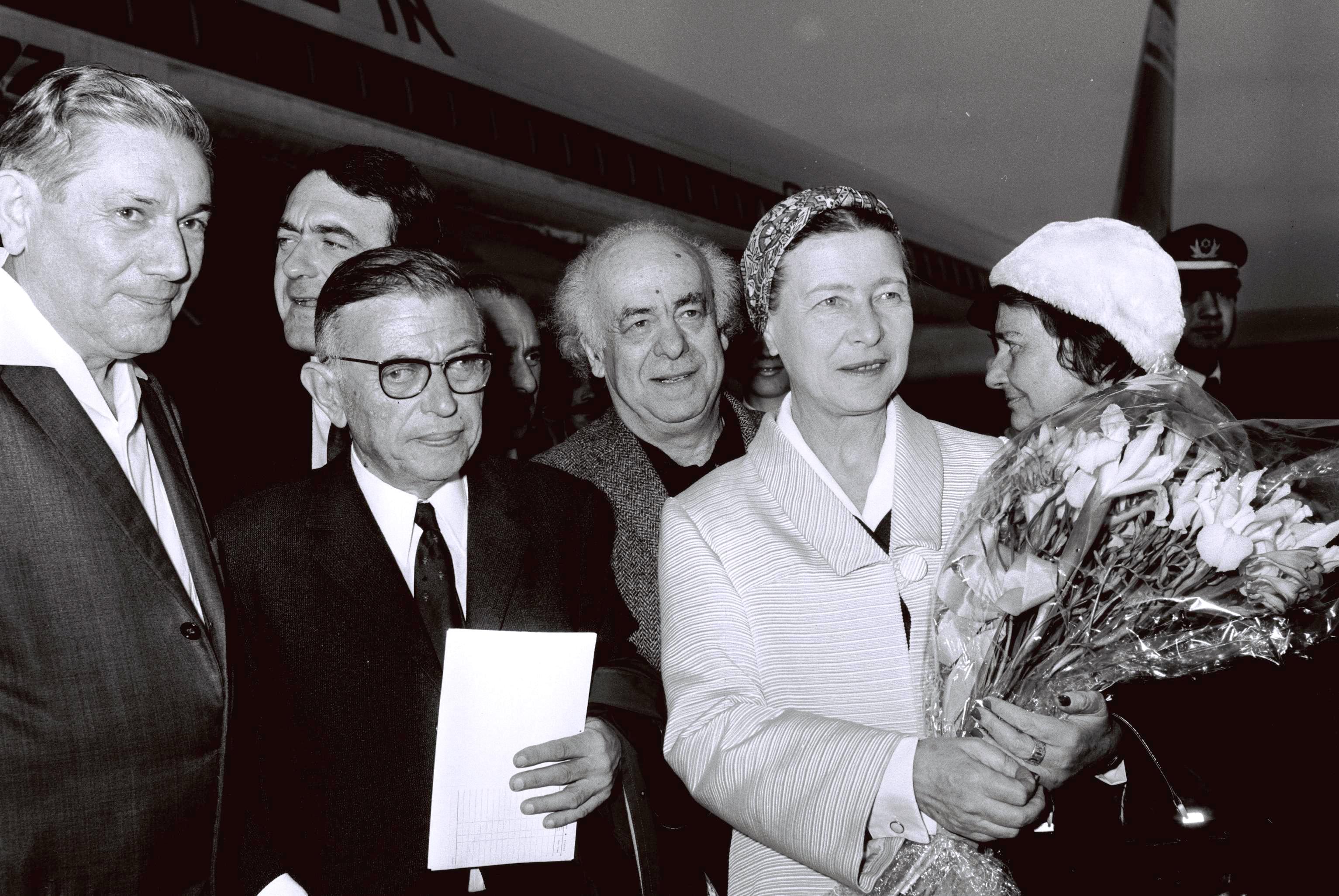
Simone de Beauvoir was born today in 1908

Simone de Beauvoir, née le 9 janvier 1908 dans le 6e arrondissement de Paris, ville où elle est morte le 14 avril 1986, philosophe, romancière, épistolière, mémorialiste et essayiste française souvent considérée comme une théoricienne importante du féminisme, a participé au mouvement de libération des femmes dans les années 1970. Elle a partagé la vie du philosophe Jean-Paul Sartre.
 

Simone de Beauvoir (9 January 1908 – 14 April 1986) was a French writer, intellectual, existentialist philosopher, political activist, feminist and social theorist. She had a significant influence on both feminist existentialism and feminist theory. De Beauvoir wrote novels, essays, biographies, autobiography and monographs on philosophy, politics and social issues. She is known for her 1949 treatise The Second Sex, a detailed analysis of women's oppression and a foundational tract of contemporary feminism; and for her novels, including She Came to Stay and The Mandarins. She is also known for her open relationship with French philosopher Jean-Paul Sartre.
Simone de Beauvoir | Beauvoir and Sartre arriving Israel, welcomed by Avraham Shlonsky and Leah Goldberg, 1967
Plaque: 24, rue Cels
Dans cet hôtel ont habité, entre 1937 et 1939 puis à diverses reprises durant la guerre, Simone de Beauvoir (1908-1986), Jean-Paul Sartre (1905-1980). "Je trichais quand je disais: on ne fait qu'un. Entre deux individus, l'harmonie n'est jamais donnée, elle doit indéfiniment se conquérir." (S. de Beauvoir, La Force de l'âge) "Mais il est une chose qui ne change point, ni ne peut changer: c'est que quoi qu'il arrive et quoi que je devienne, je le deviendrai avec vous." (J.P. Sartre, Lettres au Castor). Soucieux de préserver leur liberté mutuelle, ils occupaient à l'hôtel deux chambres séparées dominant le cimetière du Montparnasse, où la mort les a réunis. Association La Mémoire des lieux.
Simone de Beauvoir (1908-1986) and Jean-Paul Sartre (1905-1980) stayed in this hotel in 1937-1939 and then again during WWII. "I was lying when I was saying: We are one. Between two individuals harmony is never given, it must be conquered endlessly.'(S. de Beauvoir, La Force de l'âge / The Prime of Life). "But one thing will never and cannot change: whatever happens, and whoever I become I will become it with you' (J.P. Sartre, Lettres au Castor / Witness to My Life & Quiet Moments in a War). Anxious to preserve their personal liberty, they stayed in two rooms, each with a view to the Montparnasse cemetery, where they are re-united.  Association La Mémoire des lieux.
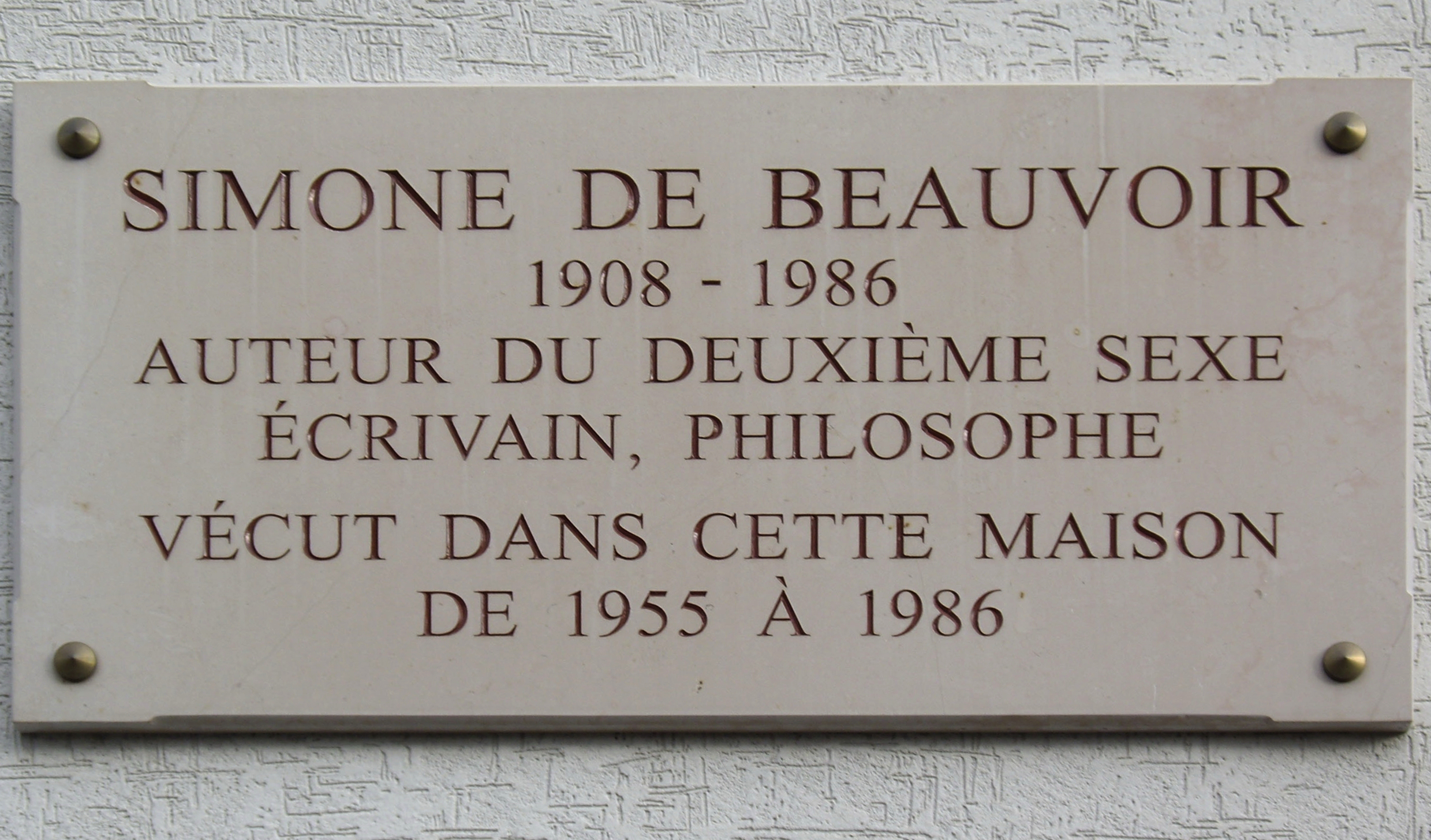
Plaque: 11bis, rue Victor Schoelcher
Simone de Beauvoir, 1908-1986, auteur du Deuxième sexe, écrivain, philosophe, vécut dans cette maison de 1955 à 1986
Simone de Beauvoir, 1908-1986, writer and philosopher who authored The Second Sex, lived in this house 1955 - 1986.

Wikipédia fr:Simone de Beauvoir
Wikipedia En:Simone de Beauvoir
Copyrights: Images hotlinked from Wikipedia Commons retain their licences. All other pictures are CC-BY-NC-SA, Serendiparis, 2001-2013

Wednesday, January 6, 2016

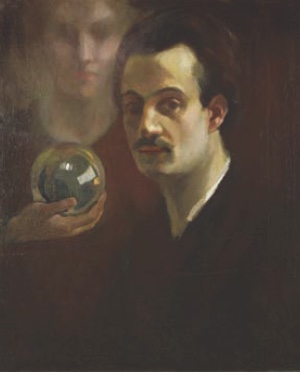
Khalil Gibran, Lebanese American writer, was born today in 1883

Gibran Khalil Gibran (جبران خليل جبران), poète et peintre libanais, est né le 6 janvier 1883 à Bcharré, Liban. En 1895, il émigre avec sa famille aux États-Unis, où il vivra la majeure partie de sa vie; il est mort le 10 avril 1931 à New York. En 1908-1910, Gibran étudier la peinture à Paris, où il fréquente, entre autres, l'atelier Colarossi. Publié en 1923 et composé de vingt-six textes poétiques, son recueil "Le Prophète" est devenu particulièrement populaire pendant les années 1960 dans le courant de la contre-culture et les mouvements New Age.
 

Kahlil Gibran (جبران خليل جبران)(January 6, 1883 – April 10, 1931), a Lebanese-American artist, poet, and writer, was born in the north of modern-day Lebanon, and immigrated with his family to the United States in 1895, where he studied art and began his literary career, writing in both English and Arabic. He studied painting in Paris in 1908-1910. He is chiefly known in the English-speaking world for his 1923 book The Prophet, an early example of inspirational fiction including a series of philosophical essays written in poetic English prose, which gained popularity in the 1960s counterculture.
Khalil Gibran | selfportrait/autoportrait, c. 1911
Khalil Gibran | autoportrait, c. 1911
Plaque: 14, avenue du Maine
Ici
vécut
de 1908 à 1910
Gibran Khalil Gibran
1883-1931
peintre et poète
libano-americain.
Gibran Khalil Gibran
1883-1931
Lebanese American
painter and poet
lived
here
1908 - 1910.

Wikipédia fr:Khalil Gibran
Wikipedia En:Khalil Gibran
Copyrights: Images hotlinked from Wikipedia Commons retain their licences. All other pictures are CC-BY-NC-SA, Serendiparis, 2001-2013

Sunday, December 13, 2015

Heinrich Heine, born today in 1797, lived and died in Paris

Heinrich Heine, né le 13 décembre 1797 à Düsseldorf et mort le 17 février 1856 à Paris, est un poète et journaliste allemand.
Heirich Heine, German poet, was born in Dusseldorf, 13 Dec 1797. A plaque located at 3, Ave Matignon, indicates where he died  on 17 Feb 1856. Another plaque shows where he lived for nearly 5 years.
Heinrich Heine | 1831, Kunsthalle Hamburg
Heinrich Heine | Heinrich Heine, 1831, Kunsthalle Hamburg
Plaque: 3, avenue Matignon
Le poète
Henri Heine
né à Dusseldorf en 1797
est mort ici le 17.2.1856
The poet Henri Heine, born in Dusseldorf in 1797, died here on 17 February 1856
Plaque: 72, rue du Faubourg Poissonnière
Henri Heine
né à Dusseldorf le
13 décembre 1797
mort à Paris le
17 février 1856
a vécu dans cette maison de
septembre 1841 à avril 1846.
 
"Si quelqu'un vous demande
comment je me porte ici, dites
alors 'Comme un poisson dans
l'eau' ou plutôt dites aux gens que,
lorsque dans la mer un poisson
demande à un autre comment il se
porte, de cernier répond:
'Comme Heine à Paris'."
Henrich Heine,
born in Dusseldorf on
13 December 1797,
died in Paris on
17 February 1856
lived in this house from
September 1841 through April 1846.
 
"If people ask you how I feel here, answer 'Like a fish in water' or, rather, tell them that, when a fish in sea asks another fish how it feels, the latter answers: "Like Heine in Paris'"

Wikipédia fr:Heinrich Heine
Wikipedia En:Heinrich Heine
Copyrights: Images hotlinked from Wikipedia Commons retain their licences. All other pictures are CC-BY-NC-SA, Serendiparis, 2001-2013

Saturday, September 12, 2015

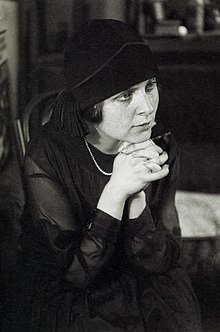
Elsa Triolet, Russian-French writer, was born today in 1896, in Moscow

Elsa Triolet,  née Elsa Kagan, est une femme de lettres d'origine russe née le 12 septembre 1896 à Moscou. Après avoir, à19 ans, connu Maiakovski, elle épouse un offier français en 1918 et le suit à son retour en France. Elle rencontre Louis Aragon en 1928; leur vie commune dure jusqu'au décès d'Elsa, le 16 juin 1970, dans leur propriété de Saint-Arnoult-en-Yvelines. C'est Elsa qui incite Aragon à adhérer au parti communiste, et ils participent ensemble à la Résistance pendant la seconde guerre mondiale. Elsa Triolet est, en 1944, la première femme a obtenir le prix Goncourt.

Elsa Triolet,  née Elsa Kagan, is a French writer of Russian origin. She was born 12 September 1896 in Moscou. She meets Mayakovski, when she is 19. A year later, she marries a French army officer, and follows him when he returns to France, before divorcing. She meets Louis Aragon in 1928; they live together until she dies, 16 June 1970, in their property near Paris. It is Elsa who incites Aragon to join the Communist parti. They take part in the French Resistance. In 1944, she is the first woman to be awarded the prix Goncourt, the most famous prize in French literature.
Elsa Triolet | 1925
Elsa Triolet | 1925
Plaque: 29, rue Campagne Première
Dans l'effervescence créatrice des années 1920 L'hôtel Istria accueillit entre autres artistes Francis Picabia, Marcel Duchamp, Moïse Kisling, peintres; Man Ray, photographe; Kiki de Montparnasse, modèle et égérie; Eric Satie, compositeur; Rainer-Maria Rilke, Tristan Tzara, Vladimir Maïakovski, poètes; et Louis Aragon qui y rejoignait Elsa Triolet.

"Ne s'éteint que ce qui brilla... Lorsque tu descendais de l'hôtel Istria Tout était différent rue Campagne Première, En mil neuf cent vingt neuf, vers l'heure de midi...", Louis Aragon (Il ne m'est Paris que d'Elsa).

Association La Mémoire des Lieux
In the roaring 1920s this hotel Istria hosted numerous artists including Francis Picabia, Marcel Duchamp, Moïse Kisling, painters; Man Ray, photographer; Kiki de Montparnasse, model and égérie; Eric Satie, composer; Rainer-Maria Rilke, Tristan Tzara, Vladimir Maïakovski, poets; and Louis Aragon who joined Elsa Triolet.

"Only what has been bright can fade away… When you used to come to hôtel Istria every thing looked different in street Campagne Première, in nineteen hundred and twenty nine, around noon time…", Louis Aragon (Il ne m'est Paris que d'Elsa).

The Memory of Places Society

Wikipédia fr:Elsa Triolet
Wikipedia En:Elsa Triolet
Copyrights: Images hotlinked from Wikipedia Commons retain their licences. All other pictures are CC-BY-NC-SA, Serendiparis, 2001-2013

Saturday, July 18, 2015

Martin Flinker, Austrian writer and publisher, was born today in 1895

Martin Edward Flinker (né le 18 juillet 1895 à Czernowitz et mort le 21 juin 1986 à Paris) était un libraire, éditeur, auteur et critique littéraire autrichien.  Son nom est associé à des librairies célèbres, à Vienne et à Paris, celle de Paris ayant été un véritable microcosme de culture littéraire allemande.
Martin Edward Flinker (born 18 July 1895, Czernowitz - Died 21 June 1986, Paris) was an Austrian publisher, writer, bookseller and critique. He and his brother Karl managed two libraries, one in Vienna, one in Paris. The latter was renowned as microcosm of German literary culture.
Martin Flinker | Martin Flinker dans sa librairie - © Musée d'art et d'histoire du judaïsme
Martin Flinker dans sa librairie
© Musée d'art et d'histoire du judaïsme
Plaque: 48, quai des Orfèvres
Ici fut de 1948 à 1988 l'illustre librairie et maison d'édition de Martin et Karl Flinker dont les amis se nommaient Th. Mann, R. Musil, H. Hesse, H. Broch, S Zweig, P.Celan, Michaux, Éluard, Aragon, Queneau
Here was, from 1948 to 1988, the famous bookshop and publisher run by Martin and Karl Flinker, whose friends were Thomas Mann, Robert Musil, Hermann Broch, Stefan Zweig, Paul Celan, Herni Michaux, Paul Éluard, Louis Aragon, Raymond Queneau.

Wikipédia fr:Martin Flinker
Wikipedia En:
Copyrights: Images hotlinked from Wikipedia Commons retain their licences. All other pictures are CC-BY-NC-SA, Serendiparis, 2001-2013

Friday, July 10, 2015

Marcel Proust, one of the most important writers of all times, was born in Paris today in 1871.

Marcel Proust, né à Auteuil le 10 juillet 1871 et mort à Paris le 18 novembre 1922, est un écrivain français, dont l'œuvre principale est À la recherche du temps perdu. Il est considéré par beaucoup comme l'un des géants de la littérature mondiale. Pas moins de cinq plaques commémorent Proust à Paris: l'une montre où il est né, deux où il a vécu, une indique un salon qu'il a fréquenté, et la cinquième rappelle que Walter Benjamin, qui a vécu deux and à Paris, a aussi traduit Proust en allemand.

Marcel Proust (10 July 1871 – 18 November 1922) was a French novelist, critic, and essayist best known for his monumental novel À la recherche du temps perdu (In Search of Lost Time; earlier translated as Remembrance of Things Past), published in seven parts between 1913 and 1927. He is considered by many to be one of the greatest authors of all time.
Marcel Proust | Marcel Proust, 1900
Plaque: 8bis, rue Laurent Pichat
Marcel Proust habita cette maison d'avril à octobre 1919.
Marcel Proust lived here, April-October 1919.
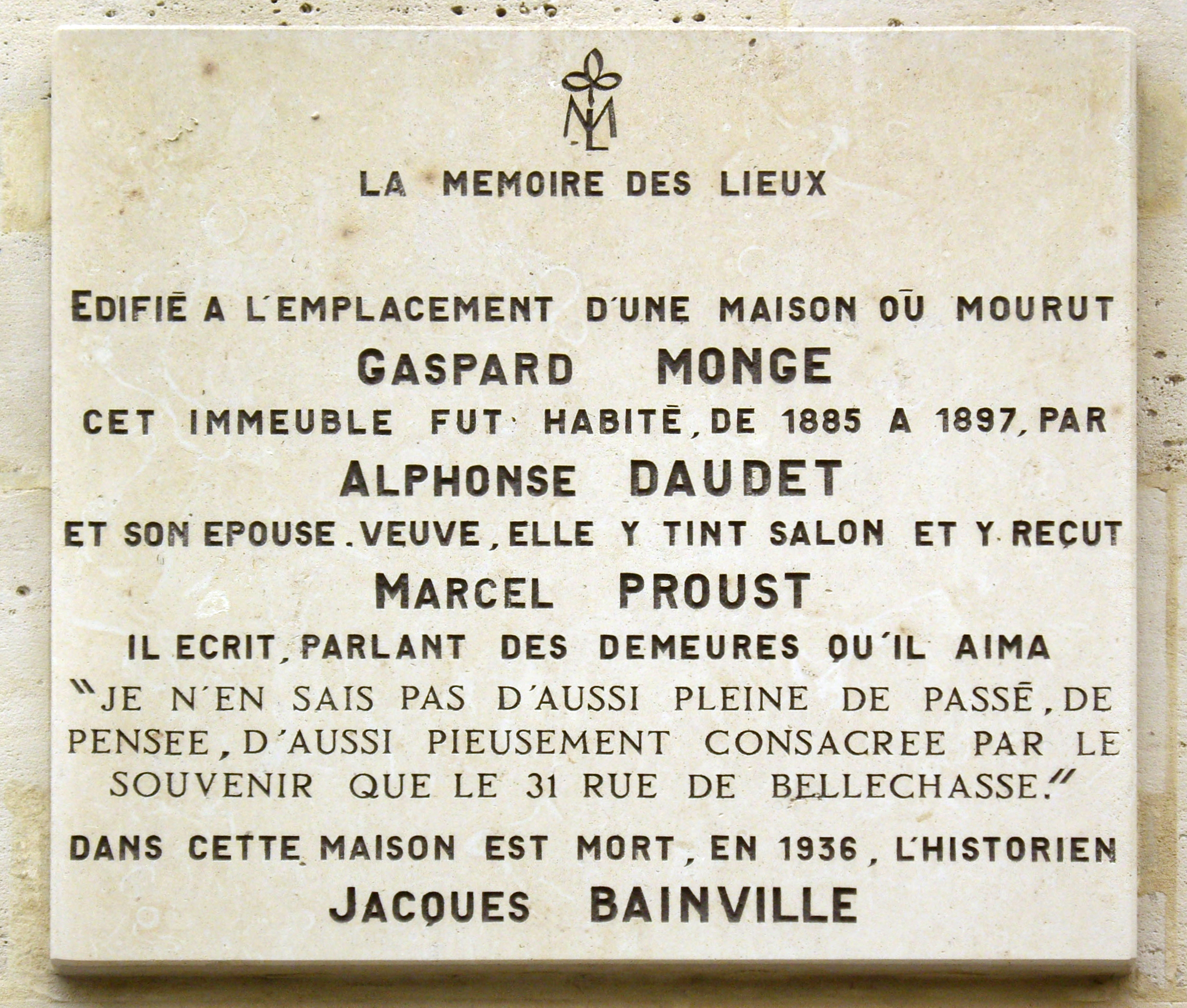
Plaque: 31, rue de Bellechasse
La mémoire des lieux
Edifié à l'emplacement d'une maison où mourut
Gaspard Monge
cet immeuble fut habité, de 1885 à 1897, par
Alphonse Daudet
et son épouse. Veuve, elle y tint salon et y reçut
Marcel Proust
Il écrit, parlant des demeures qu'il aima
"Je n'en sais pas d'aussi pleine de passé, de
pensée, d'aussi pieusement consacrée par le
souvenir que le 31 rue de Bellechasse."
Dans cette maison est mort, en 1936, l'historien
Jacques Bainville
Gaspard Monge died in a house formerly locayted here. Alphonse Daudet and his wife lived in the present building in 1885-1897. After his death she held a salon whereMarcel Proust used to come. He wrote, speaking of the houses he liked: 'I know none as filled of the past and of thought, or as piously consecrated by remembrance than the 31 rue de Bellechasse'.
The historian Jacques Bainville died in this house in 1936.
Plaque: 102, boulevard Haussmann
Marcel Proust
1871-1922
habita cet immeuble
de 1907 à 1919.
Marcel Proust
1871-1922
lived here
from 1907 to 1919.
Plaque: 96, rue La Fontaine
Ici naquit
Marcel Proust
le 10 juillet 1871
Marcel Proust was born here, 10 July 1871.
Plaque: 10, rue Dombasle
Walter Benjamin, 1892-1940, philosophe et écrivain allemand, traducteur de Proust et Baudelaire, a vécu dans cet immeuble de 1938 à 1940.
Walter Benjamin, 1892-1940, German philosopher and writer, who translated Proust and Baudelaire, lived here 1938-1940.

Wikipédia fr:Marcel Proust
Wikipedia En:Marcel Proust
Copyrights: Images hotlinked from Wikipedia Commons retain their licences. All other pictures are CC-BY-NC-SA, Serendiparis, 2001-2013

Friday, March 13, 2015

Sylvia Beach, an American-born bookseller and publisher who lived most of her life in Paris, was born today in 1887

Sylvia Beach, née le 14 mars 1887 à Baltimore, Maryland et morte le 5 octobre 1962 à Paris, était une libraire et éditrice américaine.
 
Sylvia Beach arrive à Paris en 1916, et devient la compagne de la libraire Adrienne Monnier. En 1919, elle ouvre sa propre librairie « Shakespeare and Co » au 8 rue Dupuytren, laquelle déménagera en mai 1921 au 12 rue de l'Odéon. Sa librairie accueille alors les intellectuels américains et anglo-saxons de Paris (Man Ray, Ezra Pound, Ernest Hemingway), mais aussi français (Valery Larbaud, André Gide, Paul Valéry, Jacques Lacan).
 
En 1922, elle publie la version originale du roman de James Joyce, Ulysse, dont Adrienne Monnier publiera la première traduction française en 1929.
 

Sylvia Beach (March 14, 1887 – October 5, 1962), born Nancy Woodbridge Beach, was a American-born bookseller and publisher who lived most of her life in Paris, where she was one of the leading expatriate figures between World War I and II. She is known for her Paris bookstore, Shakespeare and Company, which published James Joyce's controversial book, Ulysses.
 
Sylvia Beach | Sylvia Beach, James Joyce and Adrienne Monnier at Shakespeare & Co. in Paris in c. 1920. Image courtesy of the Beinecke Rare Book & Manuscript Library, Yale University
Plaque: 10, rue de l'Odéon
En 1922,
dans cette maison,
Mlle Sylvia Beach publia
"Ulysses"
de James Joyce.
JJSSF
In 1922
in this house
Miss Sylvia Beach published
Ulysses
by James Joyce.
JJSSF

Wikipédia fr:Sylvia Beach
Wikipedia En:Sylvia Beach
Copyrights: Images hotlinked from Wikipedia Commons retain their licences. All other pictures are CC-BY-NC-SA, Serendiparis, 2001-2013

Friday, November 21, 2014

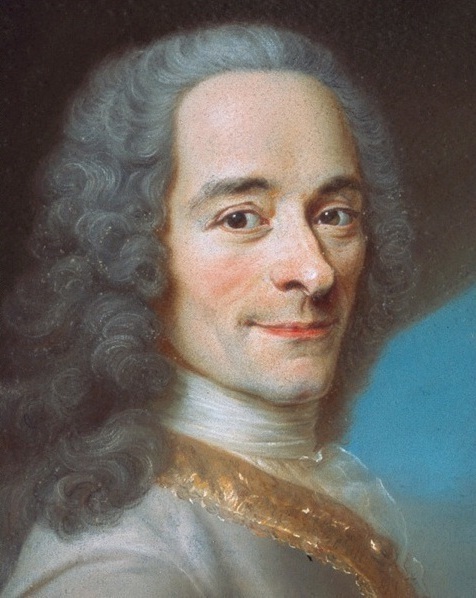
Voltaire would turn 320 today

François-Marie Arouet, dit Voltaire, né le 21 novembre 1694 à Paris où il est mort le 30 mai 1778, est un écrivain et philosophe qui a marqué le XVIIIe siècle et qui occupe une place particulière dans la mémoire collective française. Il esquisse en effet la figure de l’intellectuel engagé au service de la vérité, de la justice et de la liberté de penser.
 
Symbole des Lumières, chef de file du parti philosophique, son nom reste attaché à son combat contre « l’infâme », nom qu’il donne au fanatisme religieux, et pour le progrès et la tolérance. Il est cependant déiste et son idéal reste celui d’une monarchie modérée et libérale, éclairée par les « philosophes ».

Voltaire (born François-Marie Arouet , 21 November 1694 – 30 May 1778) was a French Enlightenment writer, historian and philosopher famous for his wit and his advocacy of freedom of religion, freedom of expression, and separation of church and state.
Voltaire | Voltaire, by Maurice Quentin de La Tour
Plaque: 27, quai Voltaire
Voltaire
né à Paris
le 21 novembre 1694
est mort dans cette maison
le 30 mai 1778
Voltaire,
born in Paris, 21 November 1694,
died in this house, 30 May 1778.

Wikipédia fr:Voltaire
Wikipedia En:Voltaire
Copyrights: Images hotlinked from Wikipedia Commons retain their licences. All other pictures are CC-BY-NC-SA, Serendiparis, 2001-2013

Thursday, June 19, 2014

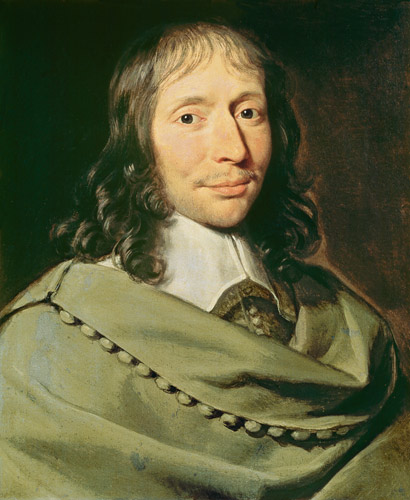
Blaise Pascal, philosopher, writer and inventor of the first mechanical calculator, was born today in 1623.

Blaise Pascal, né le 19 juin 1623 à Clairmont (aujourd'hui Clermont-Ferrand), en Auvergne et mort le 19 août 1662 à Paris, est un mathématicien, physicien, inventeur, philosophe, moraliste et théologien français.


Blaise Pascal (19 June 1623 – 19 August 1662) was a major mathematician, physicist, writer, Christian philosopher, and the inventor of the first mechanical calculator.
Blaise Pascal
Blaise Pascal
Plaque: Place Sainte-Geneviève
Epitaphe
de Blaise Pascal

Pro columna superiori
Sub tumulo marmoreo

Jacet Blasius Pascal Claromontanus, Stephani Pascal in suprema apud Arvernos subsidiorom [sic] curia praesidis filius, post aliquot annos in severiori secessu et divinae legis meditatione transactos faeliciter et religiose in pace Christi vita functus, Anno 1662, aetatis 39, die 19 augusti. Optasset ille quidem prae paupertatis et humilitatis studio etiam his sepulchri honoribus carere, mortuusque etiam num latere qui vivus semper latere voluerat verum ejus in hac parte votis cum cedere non posset Florinus Perier in aedem subsidiorum curia consiliarius, Gilbertae Pascal Blasii Pascal sororis conjux amantissimus, hanc tabulam posuit qua et suam in illum pietatem significaret, et christianos ad christiana precum officia sibi ac defuncto pro futura cohortaretur.

Devant le pilier antérieur, sous un tombeau de marbre, repose Blaise Pascal, de Clermont, fils d'Etienne Pascal, président de la cour suprême des aides en Auvergne.Après quelques années passées dans une retraite très sévère et dans la méditation de la loi divine, il quitta heureusement et religieusement cette vie, dans la paix du Christ, en l'an 1662, agé de 39 ans, le 19 août. Il aurait certes préféré, par amour de la pauvreté et de l'humilité, être privé même de ces honneurs du tombeau et demeurer caché même dans la mort, lui qui avait toujours voulu vivre caché. Cependant, n'ayant pu accéder à cette partie de son voeu, Florin Périer, conseiller en cette même cour des aides, et époux très aimant de Gilberte Pascal, soeur de Blaise Pascal, a fait poser cette plaque pour témoigner de sa vénération envers lui, et exhorter les chrétiens au devoir chrétien des prières qui puissent être utiles à lui et au défunt.

Epitaph to Blaise Pascal

In front of the column that was here, under a marble tomb, rests Blaise Pascal, born in Clermont, son of Etienne Pascal, President of the Supreme Court of Aids in Auvergne.
After a few years in a very severe retreat and meditation on the divine law, he departed this life happily and religiously, in the peace of Christ, in the year 1662, aged 39, on August 19.
He would have preferred, out of love for poverty and humility, to be deprived even of the honors of the tomb and remain hidden even in death, who had always wanted to live in hiding.
However, not being able to accomodate this part of his vow, Florin Perier, counselor to the same Court of Aids, and very loving husband of Gilberte Pascal, Blaise Pascal's sister, has had this plaque set here to show his reverence for him and urges all Christians to the Christian duty of prayers, that may be useful to him and the deceased. RIP.
Plaque: Place Sainte-Geneviève
Le corps de
Blaise Pascal
mort le 19 août 1662
sur cette paroisse de
Saint-Etienne du Mont
a été inhumé
près de ce pilier.
RIP

The body of Blaise Pascal, who died on 19 August 1662 in this parish, Saint-Etienne du Mont, is interred near this column. RIP.
Plaque: 54, rue Monsieur le Prince
Ici
dans l'ancienne rue
des Francs bourgeois Saint Michel
de 1654 à 1662
vécut
Blaise Pascal

Blaise Pascal lived here between 1654 and 1662, in what was then rue des francs-bougeois Saint-Michel.
Plaque: 2, rue Rollin
Ici s'élevait la maison où Blaise Pascal est mort le 19 août 1692
[plaque sans doute déplacée ou enlevée]

Here was the house where Blaise Pascal died, 19 August 1692

[plaque probably removed]


Wikipédia fr:Blaise Pascal
Wikipedia En:Blaise Pascal
Copyrights: Images hotlinked from Wikipedia Commons retain their licences. All other pictures are CC-BY-NC-SA, Serendiparis, 2001-2013

Tuesday, August 27, 2013

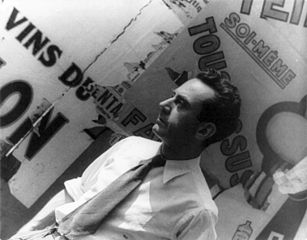
Man Ray, American surrealist artist

Man Ray (Emmanuel Radnitzky), né le 27 août 1890, à Philadelphie, États-Unis, mort le 18 novembre 1976, à Paris, France, est un peintre, photographe et réalisateur de films, acteur du dadaïsme à New York, puis du surréalisme à Paris.
 
Man Ray a passé la plus grande part de sa vie à Paris, notamment autour de Montparnasse . Une plaque rappelle qu'il fréquentait, comme Picabia et Duchamp, l'hôtel Istria. Il est mort à Paris et y est enterré, au cimetière du Montparnasse.
[... Lire sur Wikipédia]


Man Ray (born Emmanuel Radnitzky, August 27, 1890 – November 18, 1976) was an American modernist artist who spent most of his career in Paris, France. He was a significant contributor to the Dada and Surrealist movements, although his ties to each were informal.
"One of the 25 most influential artists of the 20th century" (ArtNews magazine, 1999), Man Ray produced major works in a variety of media but considered himself a painter above all, although he is now best known for his avant-garde photography, in fashion and portrait.
[... More on Wikipedia]
Man Ray | Portrait by Carl Van Vechten, Paris, 1934
Man Ray | Man Ray by Carl Van Vechten, Paris, 1934
Plaque: 29, rue Campagne Première
Dans l'effervescence créatrice des années 1920 L'hôtel Istria accueillit entre autres artistes Francis Picabia, Marcel Duchamp, Moïse Kisling, peintres; Man Ray, photographe; Kiki de Montparnasse, modèle et égérie; Eric Satie, compositeur; Rainer-Maria Rilke, Tristan Tzara, Vladimir Maïakovski, poètes; et Louis Aragon qui y rejoignait Elsa Triolet.

"Ne s'éteint que ce qui brilla... Lorsque tu descendais de l'hôtel Istria Tout était différent rue Campagne Première, En mil neuf cent vingt neuf, vers l'heure de midi...", Louis Aragon (Il ne m'est Paris que d'Elsa).

Association La Mémoire des Lieux
In the roaring 1920s this hotel Istria hosted numerous artists including Francis Picabia, Marcel Duchamp, Moïse Kisling, painters; Man Ray, photographer; Kiki de Montparnasse, model and égérie; Eric Satie, composer; Rainer-Maria Rilke, Tristan Tzara, Vladimir Maïakovski, poets; and Louis Aragon who joined Elsa Triolet.

"Only what has been bright can fade away… When you used to come to hôtel Istria every thing looked different in street Campagne Première, in nineteen hundred and twenty nine, around noon time…", Louis Aragon (Il ne m'est Paris que d'Elsa).

The Memory of Places Society

Wikipédia fr:Man Ray
Wikipedia En:Man Ray
Copyrights: Images hotlinked from Wikipedia Commons retain their licences. All other pictures are CC-BY-NC-SA, Serendiparis, 2001-2013

Wednesday, August 14, 2013

Raymond Duncan, American dancer, brother of Isadora Duncan

Raymond Duncan, né le 1er novembre 1874 à San Francisco et mort le 14 août 1966 à Cavalaire-sur-Mer, est un philosophe, artiste, poète, artisan et danseur américain, frère de la danseuse Isadora Duncan. [... Lire sur Wikipédia]


Raymond Duncan, American dancer, artist, poet, craftsman, and philosopher, and brother of dancer Isadora Duncan, was born 1st November 1874 in San Francisco. He lived and worked in Paris, where he founded the Academy, in the same house where George Sand had lived, located rue de Seine. He died in Southern France 14 August 1966.
[... More on Wikipedia]
Raymond Duncan | Raymond Duncan with his wife and child, 1912
Plaque: 31, rue de Seine
George Sand (1804-1876)
habita cette maison en 1831
puis Raymond Duncan
y créa l'Académie
de 1929 à 1966
George Sand (1804-1876)
lived in this house in 1831.
Raymond Duncan founded the Academy here from 1929 - 1966 [sic].

Wikipédia fr:Raymond Duncan
Wikipedia En:Raymond Duncan
Copyrights: Images hotlinked from Wikipedia Commons retain their licences. All other pictures are CC-BY-NC-SA, Serendiparis, 2001-2013

Monday, February 18, 2013

Níkos Kazantzákis, Greek writer

Níkos Kazantzákis (Νίκος Καζαντζάκης), écrivain grec né à Héraklion le 18 février 1883, lauréat du Prix international de la paix en 1950, l'un des instigateurs du renouveau de la langue grecque moderne, la dhimotikí, a été, en 1907-1908, un des étudiants d'Henry Bergson au Collège de France. Une plaque rue du Sommerard commémore son séjour. Kazantzákis est mort à Frisbourg im Brisgau le 26 octobre 1957.

Nikos Kazantzakis, Greek writer born in Heraklion, 18 February 1883, winner of the International Prize for Peace in 1950, one of the instigators of the revival of the modern Greek language (dhimotikí) was in 1907-1908 , a student of Henry Bergson at the Collège de France. A plaque commemorates his stay rue du Sommerard. Kazantzakis died im Breisgau im Frisbourg, 26 October 1957.
Níkos Kazantzákis
Níkos Kazantzákis
Plaque: 13, rue de Sommerard
Nikos Kazantzaki,
écrivain grec,
1883 - 1957,
étudiant de Henri Bergson au Collège de France,
a vécu dans cette maison de 1907 à 1908.
"Je n'espère rien, je ne crains rien, je suis libre".
La Société internationale des amis de Nikos Kazantzaki.
Nikos Kazantzaki, Greek writer, 1883 - 1957, who studied under Henri Bergson at the Collège de France, lived in this house from 1907 to 1908.
"I hope for nothing, I fear nothing, I am free".
The International Society of the Friends of Nikos Kazantzaki.

Wikipédia fr:Níkos Kazantzákis
Wikipedia En:Níkos Kazantzákis
Copyrights: Images hotlinked from Wikipedia Commons retain their licences. All other pictures are CC-BY-NC-SA, Serendiparis, 2001-2013

Saturday, February 2, 2013

James Joyce, Irish writer

James Joyce est né le 2 février 1882 à Dublin.
 
L'un des écrivains majeurs du XXe siècle, dont tout l'œuvre est imprégné de sa vie en Irlande (The Dubliners, Dedalus, Ulysses, Finnegans Wave), a passé de noubreuses années à l'étranger.
 
Après avoir passé les années de guerre (1915-1919) à Zurich, il s'installe en 1920 à Paris sur les conseils d'Ezra Pound. 1921 est une année de travail acharné pour terminer Ulysse, dont l'édition originale est publiée à Paris par Sylvia Beach en 1922 et la première traduction française en 1929 par Adrienne Monnier.
 
Pendant son séjour parisien, il rencontre Valery Larbaud, qui le présente au Tout-Paris littéraire. En mai 1922, il fait la connaissance de Marcel Proust.
 
Maria et Eugene Jolas nourrissent et soutiennent Joyce pendant les longues années où il écrit Finnegans Wake, publiant en feuilleton dans leur magazine littéraire, Transition, plusieurs sections du roman de Joyce sous le titre Work in Progress.
 
 Il retourne vivre à Zurich après l'occupation de la France par les Allemands en 1939, mais s'établit dans l'Allier en 1940, avant de retourner à Zurich, où il s'éteint le 13 janvier 1941

James Augustine Aloysius Joyce was born on 2 February 1882 in Dublin.
 
One of the most influential writers of the 20th century, Joyce is best known for Ulysses (1922), a landmark work in which the episodes of Homer's Odyssey are paralleled in an array of contrasting literary styles, perhaps most prominently the stream of consciousness technique he perfected.
 
He lived in Paris for nearly 20 years, from 1920. Ulysses's first edition was published in Paris by Sylvia Beach, of Shakespeare's & Co., in 1921.
James Joyce, Sylvia Beach and Adrienne Monnier at Shakespeare & Co, Paris, 1920
Plaque: 71, rue du Cardinal Lemoine
James Joyce (1882-1941) écrivain britannique d'origine irlandaise, accueilli par Valéry Larbaud, a achevé ici son roman Ulysse, ouvrage majeur de la littérature du vingtième siècle.
James Joyce (1882-1941), Irish-born British writer, hosted by Valéry Larbaud, finished here writing his novel Ulysses, a major work in 20th centrury's literature.
Plaque: 10, rue de l'Odéon
En 1922,
dans cette maison,
Mlle Sylvia Beach publia
"Ulysses"
de James Joyce.
JJSSF
In 1922
in this house
Miss Sylvia Beach published
Ulysses
by James Joyce.
JJSSF

Wikipédia fr:James Joyce
Wikipedia En:James Joyce
Copyrights: Images hotlinked from Wikipedia Commons retain their licences. All other pictures are CC-BY-NC-SA, Serendiparis, 2001-2013

Friday, January 18, 2013

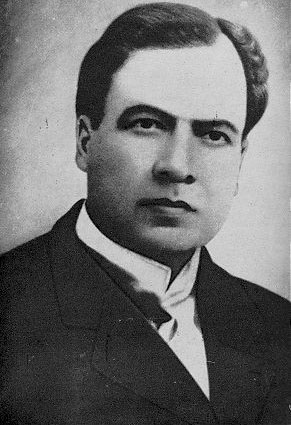
Ruben Dario, Nicaraguan poet

Félix Rubén García Sarmiento, né le 18 janvier 1867 à Metapa (aujourd'hui Ciudad Darío) et mort le 6 février 1916 à Léon, était un poète nicaraguayen. Il est à l'origine du mouvement moderniste en Amérique Latine (Azul, 1888 ; Chants de vie et d'espérance).
 
Dès 1893, il se rend à Paris, où il rencontre les poètes qu'il admire: Verlaine, Gourmont, Moréas. Le mouvement moderniste qu'il portera s'inspirera de trois mouvements européens : le romantisme, le symbolisme et le Parnasse.
 
Il vit dans la capitale française les premières années du siècle, et y publie Prosas profanas (1901) et Parisiana (1902).

Rubén Darío (born Félix Rubén García Sarmiento, 18 January 1867 – 6 February 1916) was a Nicaraguan poet who initiated the Spanish-American literary movement known as modernismo (modernism) that flourished at the end of the 19th century. Darío has had a great and lasting influence on 20th-century Spanish literature and journalism. He has been praised as the "Prince of Castilian Letters" and undisputed father of the modernismo literary movement.
 
During the first years of the 20th century, Darío lived in Paris, where in 1901 published the second edition of Prosas profanas.
In March 1903 he was appointed as consul by Nicaragua.
 
 
Rubén Darío
Rubén Darío
Plaque: 4, rue Herschel
Dans cette maison
habita de 1908 à 1912
Ruben Dario
Poète et écrivain nicaraguayen
1867 - 1916
Ruben Dario, Nicaragua poet and writer (1867-1916), lived in this house, 1908-1912.

Wikipédia fr:Rubén Darío
Wikipedia En:Rubén Darío
Copyrights: Images hotlinked from Wikipedia Commons retain their licences. All other pictures are CC-BY-NC-SA, Serendiparis, 2001-2013

Tuesday, January 15, 2013

Ossip Mandelstam, Russian poet

Ossip Mandelstam (Осип Эмильевич Мандельштам), né à Varsovie le 15 janvier 1891 et mort à  Vladivostok le 27 décembre 1938, est un poète et essayiste russe majeur du XXe siècle. Il est l'un des principaux représentants de l'acméisme, dans le cadre de « l'âge d'argent » que la poésie russe connaît peu avant la révolution d'Octobre.
 
D'octobre 1907 à mai 1908, il est étudiant à la Sorbonne à Paris où il suit les cours de Joseph Bédier et d'Henri Bergson qui auront une influence sur son oeuvre future. Il y découvre la poésie de Verlaine.
 
Arrêté une première fois en 1934 pour une épigramme jugée contre-révolutionnaire, il sera exilé à Tcherdyne puis à Voronej, jusqu’en 1937. Il est de nouveau arrêté mai 1938 lors de la période des Grandes Purges, et condamné à cinq ans de travaux forcés. Il meurt  du côté de Vladivostok pendant le voyage qui le conduit dans un camp de transit aux portes de la Kolyma. Son corps est jeté dans une fosse commune.

Osip Emilyevich Mandelstam (Осип Эмильевич Мандельштам) January 15 [O.S. January 3] 1891 – December 27, 1938) was a Russian poet and essayist who lived in Russia during and after its revolution and the rise of the Soviet Union. He had been born on 15th January, 1891 (3rd Jan old style). He was one of the foremost members of the Acmeist school of poets. His first poems were printed in 1907 in the school's almanac.
 
In April 1908, Mandelstam decided to enter the Sorbonne in Paris to study literature and philosophy. He left the following year to attend the University of Heidelberg in Germany.
 
He was arrested by Joseph Stalin's government during the repression of the 1930s and sent into internal exile. In 1938 Mandelstam was arrested again and sentenced to a camp in Siberia. He died on 27 December that year at a transit camp.
Ossip Mandelstam
Ossip Mandelstam
Plaque: 12, rue de la Sorbonne
Ossip Mandelstam, poète russe (1891-1938), a vécu dans cette maison en 1907-1908.
Ossip Mandelstam, Russian poet (1891-1938) lived in this house in 1907-1908.

Wikipédia fr:Ossip Mandelstam
Wikipedia En:Ossip Mandelstam
Copyrights: Images hotlinked from Wikipedia Commons retain their licences. All other pictures are CC-BY-NC-SA, Serendiparis, 2001-2013

Monday, December 24, 2012

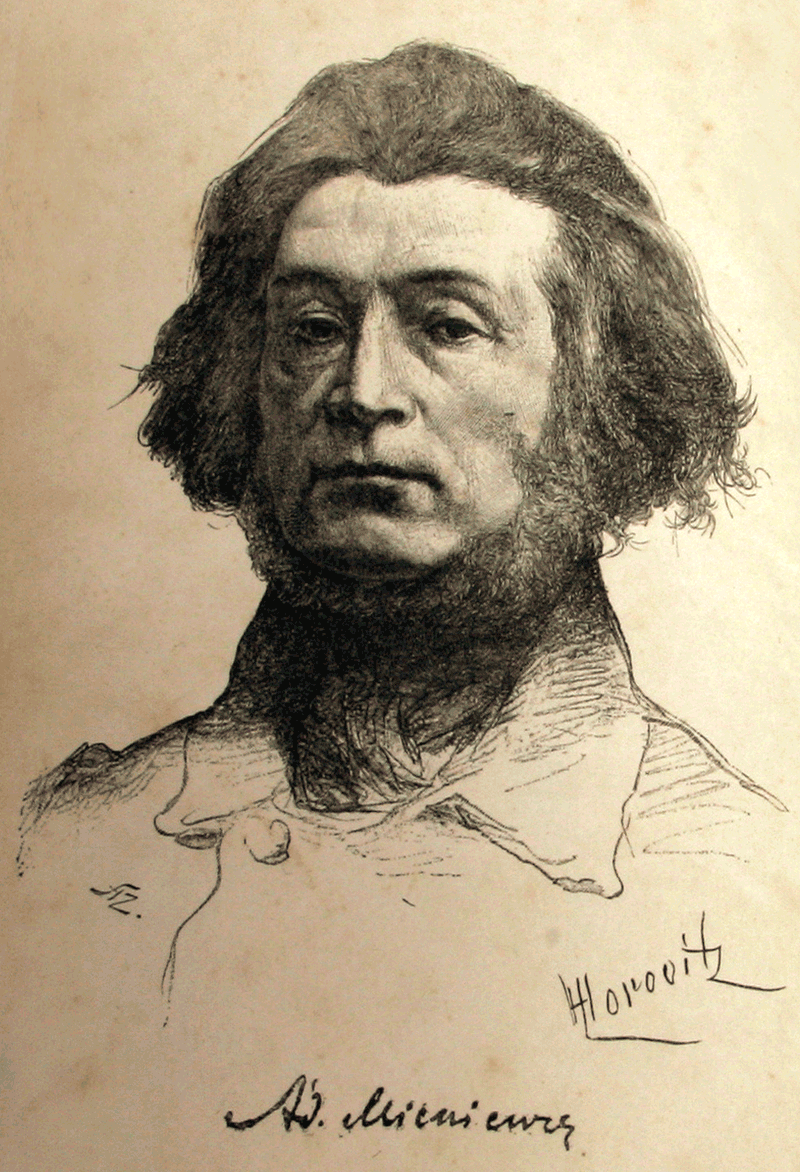
Adam Mickiewicz, Poland's national poet

Adam Bernard Mickiewicz de Poraj, né le 24 décembre 1798 à Nowogrodek (ville alors située dans l'Union de Pologne-Lituanie, aujourd'hui Navahroudak, en Biélorussie), mort le 26 novembre 1855 à Istanbul, est un poète et écrivain polonais, qui a passé une partie de sa vie en France et a été professeur au Collège de France.
 
En 1834, il épouse à Paris Celina Szymanowska, une compatriote. En 1840, il est nommé professeur de langue et littérature slave au Collège de France, sur une chaire créée pour lui. Ses cours sont suspendus en 1844, car on lui reproche de s’être laissé influencer par les opinions du mystique Towianski. Il est révoqué après le coup d’État de 1851, en même temps que Michelet et Quinet.
 
Pendant la guerre de Crimée, il part à Istanbul rejoindre la colonie polonaise qui vit à Polonezköy. Il songe à y former une légion polonaise afin de lutter contre les Russes. Mais il meurt brusquement du choléra.

Adam Bernard Mickiewicz (24 December 1798 – 26 November 1855) was a Polish national poet, essayist, translator, publicist and political writer. A prime representative of the Polish Romantic period, he is considered the greatest poet in all Polish literature. A leading Romantic dramatist, he has been compared to Byron and Goethe.
 
He is known primarily as the author of the poetic drama Dziady and national epic Pan Tadeusz, the last great epic of Polish-Lithuanian noble culture. These and other works served as inspiration during regional uprisings. Mickiewicz was active in the struggle to achieve independence for his homeland, then part of the Russian Empire. Having spent five years in internal exile in central Russia for political activities, he left the Empire in 1829 and spent the rest of his life in other countries, like many of his compatriots. He settled first in Rome, later in Paris, where he became professor of Slavic literature at the Collège de France. He died in Constantinople.
Adam Mickiewicz | Portrait, from book Poezye ADAMA MICKIEWICZA. Warszawa. Ksiegarnia Gebethnera i Wolfa. 1888
Plaque: 63, rue de Seine
Adam Mickiewicz poète national de la Pologne habitait ici quand fut publié à Paris son chef d'œuvre "Pan Tadeusz" en l'année 1834
Roku Wydania Pana Tadeuza Tutaj Miezkak Adam Mickiewicz
Adam Mickiewicz, national poet of Poland, lived here when his masterpiece, "Pan Tadeusz", was published in Paris  in 1834.

Wikipédia fr:Adam Mickiewicz
Wikipedia En:Adam Mickiewicz
Copyrights: Images hotlinked from Wikipedia Commons retain their licences. All other pictures are CC-BY-NC-SA, Serendiparis, 2001-2012