| La rafle du Vélodrome d'Hiver (16-17 juillet 1942), souvent appelée rafle du Vel' d'Hiv, est la plus grande arrestation massive de Juifs réalisée en France pendant la Seconde Guerre mondiale. En juillet 1942, le régime nazi organise l'opération « Vent Printanier » : une rafle à grande échelle de Juifs dans plusieurs pays européens. En France, le régime de Vichy mobilise la police française pour participer à l'opération : à Paris, 9 000 policiers et gendarmes rafleront les Juifs. Le 17 juillet, en fin de journée, le nombre des arrestations dans Paris et la banlieue était de 13 152 selon les chiffres de la préfecture de police. The Vel' d'Hiv Roundup (Rafle du vélodrome d'hiver), was a Nazi directed raid and mass arrest of Jews in Paris by the French police, on 16 and 17 July 1942. The roundup was one of several aimed at reducing the Jewish population in Occupied France. According to records of the Préfecture de Police, 13,152 victims were arrested, including more than 4,000 children. They were held at the Vélodrome d'Hiver (winter velodrome) in extremely crowded conditions, almost without water, food and sanitary facilities, as well as internment camps,then shipped by railway transports to Auschwitz for their mass murder. French President Jacques Chirac apologized in 1995 for the complicit role that French policemen and civil servants served in the raid. |  |
|
|
||
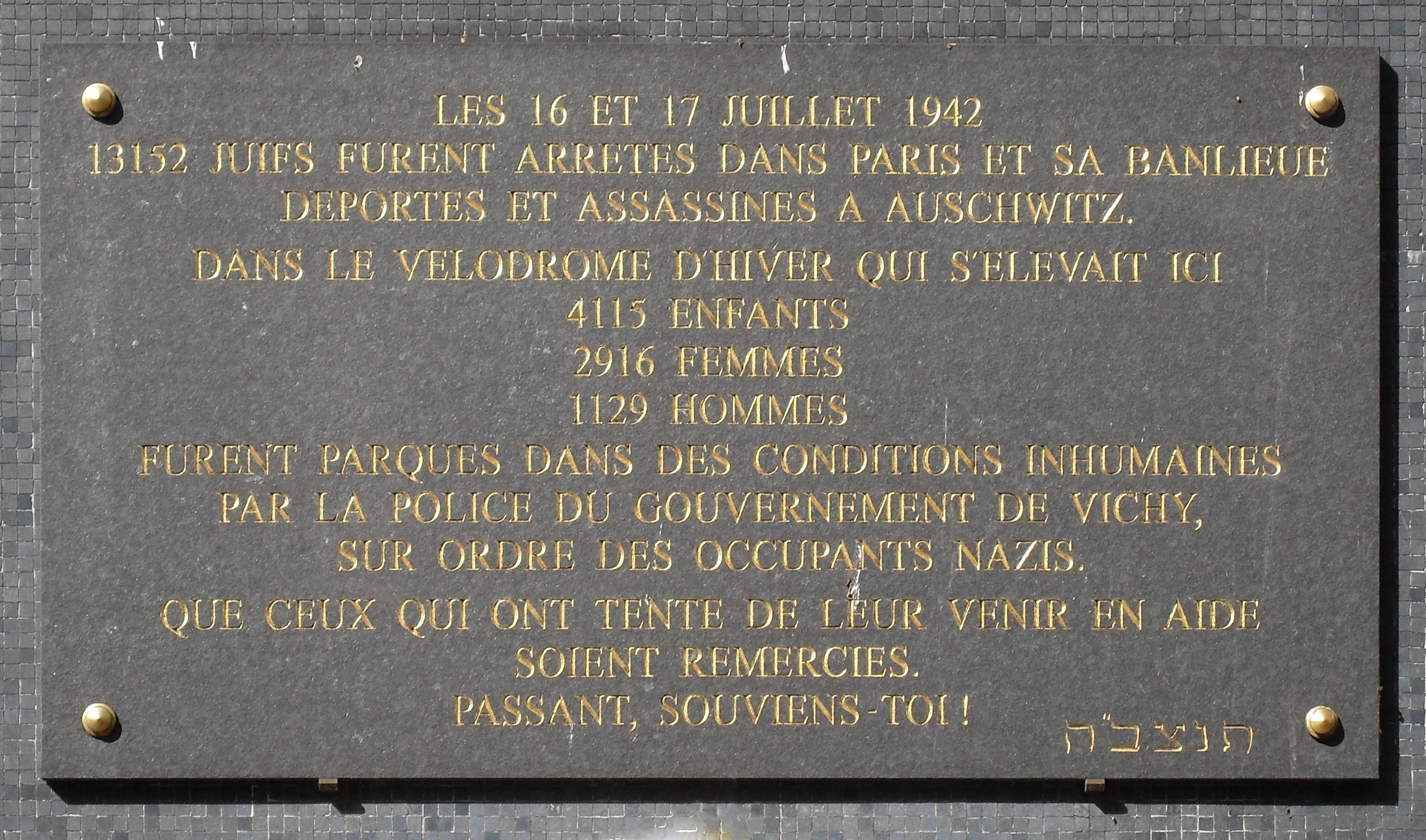
| 13 152 juifs furent arrêtés dans Paris et sa banlieue déportés et assassinés à Auschwitz Dans le Vélodrome d'hiver qui s'élevait ici 4115 enfants 2916 femmes 1129 hommes furent parqués dans des conditions inhumaines par la police du gouvernement de Vichy sur ordre des occupants nazis. Que ceux qui ont tenté de leur venir en aide soient remerciés Passant, souviens-toi. | On the 16th and 17th of July 1942, 13,152 Jews were arrested in Paris and its suburbs, to be later deported and murdered in Auschwitz. In the Winter Velodrom that stood here 4,115 children, 2,916 women, 1,129 men, were confined in unbearable conditions by the Vichy police taking their orders from the Nazis. Those who helped them must be thanked. Passer by, do not forget. |
|
|
|
||
| |
On 16 July 1942, the Vichy police force here brought Jewish man, women and children from the 13th arrondissement. They were then moved to the Vel d'Hiv, and later deported to the Auschwitz-Birkenau extermination camp. |
|
Wikipédia fr:Rafle du Vélodrome d'Hiver
Wikipedia En:Vel' d'Hiv Roundup
Copyrights: Images hotlinked from Wikipedia Commons retain their licences. All other pictures are CC-BY-NC-SA, Serendiparis, 2001-2015