Showing posts with label Place:Russia. Show all posts

Wednesday, April 12, 2017

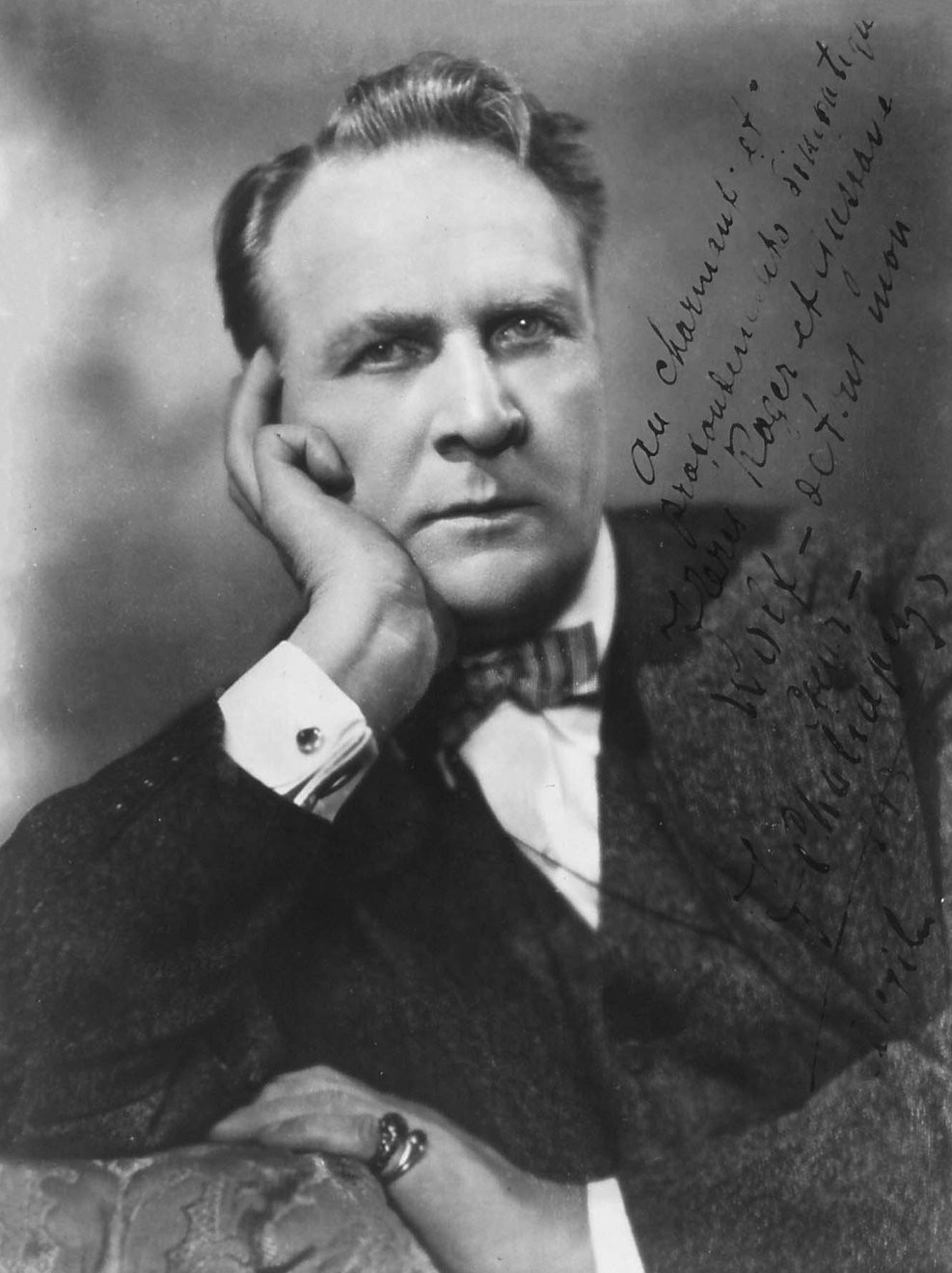
Fedor Chalipin, most famous Russian basso singer, died today in 1938 in Paris

Fédor Chaliapine (Фёдор Иванович Шаляпин) est un chanteur russe d'opéra, né le 13 février 1873 à Kazan et mort le 12 avril 1938 à Paris, est un chanteur d'opéra (basse) et acteur russe. Sa carrière internationale débute en 1901 à la Scala de Milan, puis au Metropolitan Opera de New York en 1907.
En 1922 il émigre à Paris.


Feodor Ivanovich Chaliapin (Фёдор Иванович Шаляпин) was a Russian opera singer, born 13 Feb 1873 in Kazan. Possessing a deep and expressive bass voice, he enjoyed an important international career at major opera houses and is often credited with establishing the tradition of naturalistic acting in his chosen art form. He did not return to Russia after 1921. He initially moved to Finland and later lived in France. Cosmopolitan Paris, with its significant Russian émigré population, became his base, and ultimately, the city of his death on 12 April 1938. He was renowned for his larger-than-life carousing during this period, but he never sacrificed his dedication to his art. Chaliapin's attachment to Paris did not prevent him from pursuing an international operatic and concert career in England, the United States, and further afield.
Fédor Chaliapine
Fédor Chaliapine
Plaque: 22, avenue d'Eylau

Feodor Chaliapine
artiste lyrique russe
1873-1938
vécut et mourut
dans cette maison.

Feodor Ivanovich Chaliapin,
Russian opera singer,
1873-1938,
lived and died
in this house.

Wikipédia fr:Fédor Chaliapine
Wikipedia En:Feodor Chaliapin
Copyrights: Images hotlinked from Wikipedia Commons retain their licences. All other pictures are CC-BY-NC-SA, Serendiparis, 2001-2013

Saturday, September 12, 2015

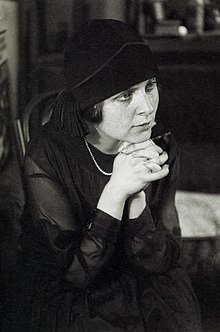
Elsa Triolet, Russian-French writer, was born today in 1896, in Moscow

Elsa Triolet,  née Elsa Kagan, est une femme de lettres d'origine russe née le 12 septembre 1896 à Moscou. Après avoir, à19 ans, connu Maiakovski, elle épouse un offier français en 1918 et le suit à son retour en France. Elle rencontre Louis Aragon en 1928; leur vie commune dure jusqu'au décès d'Elsa, le 16 juin 1970, dans leur propriété de Saint-Arnoult-en-Yvelines. C'est Elsa qui incite Aragon à adhérer au parti communiste, et ils participent ensemble à la Résistance pendant la seconde guerre mondiale. Elsa Triolet est, en 1944, la première femme a obtenir le prix Goncourt.

Elsa Triolet,  née Elsa Kagan, is a French writer of Russian origin. She was born 12 September 1896 in Moscou. She meets Mayakovski, when she is 19. A year later, she marries a French army officer, and follows him when he returns to France, before divorcing. She meets Louis Aragon in 1928; they live together until she dies, 16 June 1970, in their property near Paris. It is Elsa who incites Aragon to join the Communist parti. They take part in the French Resistance. In 1944, she is the first woman to be awarded the prix Goncourt, the most famous prize in French literature.
Elsa Triolet | 1925
Elsa Triolet | 1925
Plaque: 29, rue Campagne Première
Dans l'effervescence créatrice des années 1920 L'hôtel Istria accueillit entre autres artistes Francis Picabia, Marcel Duchamp, Moïse Kisling, peintres; Man Ray, photographe; Kiki de Montparnasse, modèle et égérie; Eric Satie, compositeur; Rainer-Maria Rilke, Tristan Tzara, Vladimir Maïakovski, poètes; et Louis Aragon qui y rejoignait Elsa Triolet.

"Ne s'éteint que ce qui brilla... Lorsque tu descendais de l'hôtel Istria Tout était différent rue Campagne Première, En mil neuf cent vingt neuf, vers l'heure de midi...", Louis Aragon (Il ne m'est Paris que d'Elsa).

Association La Mémoire des Lieux
In the roaring 1920s this hotel Istria hosted numerous artists including Francis Picabia, Marcel Duchamp, Moïse Kisling, painters; Man Ray, photographer; Kiki de Montparnasse, model and égérie; Eric Satie, composer; Rainer-Maria Rilke, Tristan Tzara, Vladimir Maïakovski, poets; and Louis Aragon who joined Elsa Triolet.

"Only what has been bright can fade away… When you used to come to hôtel Istria every thing looked different in street Campagne Première, in nineteen hundred and twenty nine, around noon time…", Louis Aragon (Il ne m'est Paris que d'Elsa).

The Memory of Places Society

Wikipédia fr:Elsa Triolet
Wikipedia En:Elsa Triolet
Copyrights: Images hotlinked from Wikipedia Commons retain their licences. All other pictures are CC-BY-NC-SA, Serendiparis, 2001-2013

Wednesday, January 2, 2013

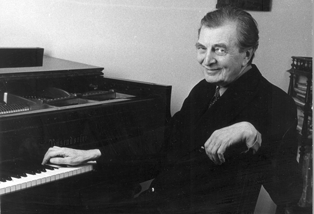
Tcherepnin, Russian-born composer

Alexandre Nikolaïevitch Tcherepnine (Александр Николаевич Черепнин) est un compositeur et pianiste russe, né à Saint-Pétersbourg le 2 janvier 1899 et décédé à Paris le 29 septembre 1977. Il émigra de Russie avec sa famille en 1917. De 1921 à 1948, il vécut à Paris entre ses tournées et ses séjours principalement en Chine, au Japon et aux Etats-Unis.  Plusieurs de ses oeuvres furent créées aux Etats-Unis, dont il avait acquis la nationalité en 1958. Il est mort à Paris en 1977.

Alexander Nikolayevich Tcherepnin (Александр Николаевич Черепнин) (21 January 1899 – 29 September 1977) was a Russian-born composer and pianist.
After the 1917 Russian Revolution, the family fled St. Petersburg to Tbilisi, Georgia. In 1921 , they settled in Paris, where Alexander completed his musical studies at the Paris Conservatory, and became associated with composers Martinu, Mihalovici and Beck.
From Paris Tcherepnin launched an international career as a pianist and composer. He began yearly visits to the United States in 1926 and later went to the Far East, making several extended visits to China and Japan between 1934 and 1937. While in China, he met Lee Hsien Ming, a young pianist whom he married in Europe. World War II, during which he lived in France, virtually stopped his musical activities but the immediate postwar period brought a resurgence of creative energies.
In 1948, he went to the United States, settling in Chicago in 1950 and in 1958 acquiring United States citizenship. He and his wife taught at DePaul University in Chicago, where the Chicago Symphony Orchestra premiered his second symphony with Rafael Kubelík conducting. From 1964 he divided his time between the United States, mainly New York, and Europe. He was a National Patron of Delta Omicron, an international professional music fraternity.
He died in Paris in 1977.
Alexandre Tcherepnine
Plaque: 2, rue de Furstenberg
Le compositeur Alexandre Tcherepnine (1899-1977) habita cette maison. 1983.
Alexandr Tcherepnin (1899-1977), composer, lived in this house. 1983

Wikipédia fr:Alexandre Tcherepnine
Wikipedia En:Alexander Tcherepnin
Copyrights: Images hotlinked from Wikipedia Commons retain their licences. All other pictures are CC-BY-NC-SA, Serendiparis, 2001-2012

Saturday, July 7, 2012

Vladimir Maïakovski

Vladimir Vladimirovitch Maïakovski (Влади́мир Влади́мирович Маяко́вский) est né le 7 juillet 1893 à Baghdati, aujourd'hui en Géorgie. Poète, dramaturge et futuriste russe, il a vécu à Paris dans les années 1920 et fréquenté les émigrés de Montparnasse.
Il est mort le 14 avril 1930 à Moscou.

Vladimir Mayakovsky was born 7 July 1893 in Baghdati, now in Georgia.  Poète, playwright and Futuriste, he lived in Paris in the 1920s, where he socialized with the Montparnasse émigrés. He died 14 April 1930 in Moscow.
Vladimir Maïakovski | Mayakovsky, 1910
Plaque: 29, rue Campagne Première
Dans l'effervescence créatrice des années 1920 L'hôtel Istria accueillit entre autres artistes Francis Picabia, Marcel Duchamp, Moïse Kisling, peintres; Man Ray, photographe; Kiki de Montparnasse, modèle et égérie; Eric Satie, compositeur; Rainer-Maria Rilke, Tristan Tzara, Vladimir Maïakovski, poètes; et Louis Aragon qui y rejoignait Elsa Triolet.

"Ne s'éteint que ce qui brilla... Lorsque tu descendais de l'hôtel Istria Tout était différent rue Campagne Première, En mil neuf cent vingt neuf, vers l'heure de midi...", Louis Aragon (Il ne m'est Paris que d'Elsa).

Association La Mémoire des Lieux
In the roaring 1920s this hotel Istria hosted numerous artists including Francis Picabia, Marcel Duchamp, Moïse Kisling, painters; Man Ray, photographer; Kiki de Montparnasse, model and égérie; Eric Satie, composer; Rainer-Maria Rilke, Tristan Tzara, Vladimir Maïakovski, poets; and Louis Aragon who joined Elsa Triolet.

"Only what has been bright can fade away… When you used to come to hôtel Istria every thing looked different in street Campagne Première, in nineteen hundred and twenty nine, around noon time…", Louis Aragon (Il ne m'est Paris que d'Elsa).

The Memory of Places Society

Wikipédia fr:Vladimir Maïakovski
Wikipedia En:Vladimir Mayakovsky
Copyrights: Images hotlinked from Wikipedia Commons retain their licences. All other pictures are CC-BY-NC-SA, Serendiparis, 2001-2012

John Paul Jones, seaman extraordinaire

John Paul Jones, né à Kirkcudbright (Écosse) le 6 juillet 1749 et mort à Paris le 18 juillet 1792, est un marin américain, héros de la Guerre d'indépendance des États-Unis.
En 1780, il est fait chevalier par Louis XIV, avant de rejoindre la Russie, où il devient contre-amiral de la marine impériale et de participer à la guerre russo-turque.
Il arrive à Paris en mai 1790. Lorsqu'il y meurt le 18 juillet 1792, son corps est préservé dans l'alcool et enseveli dans un cercueil de plomb afin que « dans l'éventualité où les États-Unis décidaient de réclamer ses restes, ceux-ci puissent être identifiés plus facilement ». Il est enterré au cimetière protestant de Saint Louis, rue de la Grange aux Belles, lieu oublié jusqu'à ce qu'une mission américaine entreprenne de retrouver sa dépouille, à partir de 1899. Il faut 6 ans d'effort pour y parvenir et Jones est exhumé le 7 avril 1905. Ses restes sont rapatriés à Annapolis par un navire escorté de trois croiseurs. Il y sera de nouveau inhumé le 24 avril 1906.

John Paul Jones (July 6, 1747 – July 18, 1792) was a Scottish sailor and the United States' first well-known naval fighter in the American Revolution.
In 1780, the King of France honors him with the title "Chevalier". When the Continental Congress in 1787 resolves that a medal of gold be struck in commemoration of his "valor and brilliant services" it is to be presented to "Chevalier John Paul Jones".  
In 1788 Jones enters into the service of the Empress Catherine II of Russia.
He then leaves Russia for France, and arrives in Paris in May 1790. When he dies there 18 July 1792 his body is preserved in alcohol and interred in a lead coffin "in the event that should the United States decide to claim his remains, they might more easily be identified." He is buried at the Saint Louis Cemetery, formerly owned by the French royal family and abandoned shortly after.
In 1905, Jones's remains are identified by U.S. Ambassador to France Gen. Horace Porter, who had searched for six years to track down the body, which is then brought to the United States aboard the USS Brooklyn, escorted by three other cruisers. On approaching the American coastline, seven U.S. Navy battleships join the procession. On 24 April 1906, Jones's coffin is installed in Bancroft Hall at the United States Naval Academy, Annapolis, Maryland, following a ceremony in Dahlgren Hall, presided over by President Theodore Roosevelt. On 26 January 1913, the Captain's remains were finally re-interred in a magnificent bronze and marble sarcophagus at the Naval Academy Chapel in Annapolis.
 
 
John Paul Jones | John Paul Jones, par Charles Wilson Peale (vers 1781).
Plaque: 19, rue de Tournon
"I have not begun to fight". John Paul Jones, capitaine de vaisseau de la marine des Etats-Unis, chevalier de l'ordre du Mérite militaire et l'un des héros de la guerre de l'Indépendance américaine, est mort dans cette maison le 18 juillet 1792.
"I have not begun to fight". John Paul Jones, captain the United States Navy, Knight in the Ordre du Mérite militaire, one of the American Independance war heroes, died here,  18 July 1792.
Plaque: 1, rue des Écluses Saint Martin
John Paul Jones, fondateur de la marine américaine. Né en Ecosse 1747, mort à Paris 1792. Inhumé ici pendant plus d'un siècle dans un cimétière protestant. Ses restes mortels ont été transportés à Annapolis en 1905. The Huguenot Spociety of America - Société d'histoire du protestantisme français, 1935
[Plaque probablement jamais posée]
John Paul Jones, founder of the American Navy. Born in Scotland, 1747. Died in Paris, 1792. Interred for more than a century here, in a cemetery for Protestants. His bodily remains were transferred to Annapolis in 1905. The Huguenot Society of America - Société d'histoire du protestantisme français, 1935
[Plaque probably absent, never laid]

Wikipédia fr:John Paul Jones (marin)
Wikipedia En:John Paul Jones
Copyrights: Images hotlinked from Wikipedia Commons retain their licences. All other pictures are CC-BY-NC-SA, Serendiparis, 2001-2012

Monday, February 13, 2012

Chaliapine

Le 13 février 1873, nait à Kazan Fédor Ivanovitch Chaliapine (Фёдор Иванович Шаляпин). Il passe une partie de sa vie à Paris, où il possède un logement. C'est là qu'il mourra d'une leucémie le 12 avril 1938. On February 13th, 1873, Feodor Chaliapin, probably the most famous opera singer of the early 20th century, was born in Kazan. He made frequest visits to Paris, where he owned a home. That is where he died on April 12th, 1938.

Plaque, 22, avenue d'Eylau, 75016 Paris

Feodor Chaliapine
artiste lyrique russe
1873-1938
vécut et mourut
dans cette maison.

Chaliapine, la plus grande basse slave de son temps, a marqué ses contemporains par ses interprétations dans les opéras de ses compatriotes Moussorgski (Boris Godounov, rôle titre) et Rimski-Korsakov (Salieri, dans Mozart et Salieri) parmi bien d'autres. Au cinéma, il a incarné Don Quichotte, dans le film de Pabst, en 1933.

Autorisé à quitter l'URSS le 31 mars 1922 pour une tournée à l'étranger, il choisit alors de ne pas retourner en URSS. Il vit dès lors notamment, en France, à Paris et Saint-Jean-de-Luz où il possède une villa. C'est dans son domicile parisien du 22, avenue d'Eylau que la leucémie l'emporte le 12 avril 1938.
Ses restes reposaient au cimetière des Batignolles jusqu'en 1984, année où ils furent transférés au cimetière de Novodevitchi de Moscou.


Agrandir le plan

Texte et photographie tirés de Wikipédia / Text and photograph from Wikipedia