Showing posts with label Place:Romania. Show all posts

Saturday, April 16, 2016

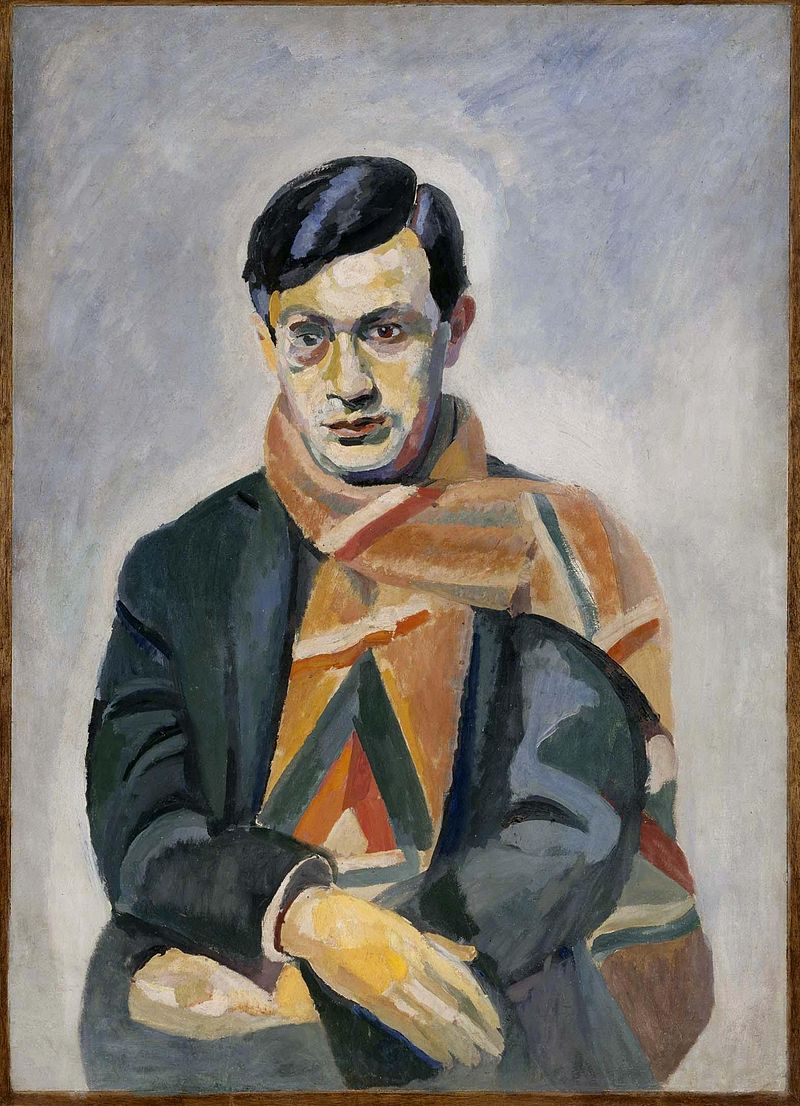
Tristan Tzara, poet and founder of Data, was born today in 1986

Tristan Tzara, né le 16 avril 1896 à Moinesti, Roumanie et mort le 25 décembre 1963 à Paris, est un écrivain, poète et essayiste de langue roumaine et française; il est l'un des fondateurs du mouvement Dada dont il sera par la suite le chef de file.

Tristan Tzara, a Romanian and French avant-garde poet, essayist and performance artist, one of the founders and central figures of the anti-establishment Dada movement, was born in Romania in 1896, moved to Paris in 1911, where he spent most of his life. He died in Paris on Christmas day, 1963. His house in Montmartre was designed by Austrian architect Adolf Loos.     
Tristan Tzara
Tristan Tzara
by Robert Delaunay
Plaque: 29, rue Campagne Première
Dans l'effervescence créatrice des années 1920 L'hôtel Istria accueillit entre autres artistes Francis Picabia, Marcel Duchamp, Moïse Kisling, peintres; Man Ray, photographe; Kiki de Montparnasse, modèle et égérie; Eric Satie, compositeur; Rainer-Maria Rilke, Tristan Tzara, Vladimir Maïakovski, poètes; et Louis Aragon qui y rejoignait Elsa Triolet.

"Ne s'éteint que ce qui brilla... Lorsque tu descendais de l'hôtel Istria Tout était différent rue Campagne Première, En mil neuf cent vingt neuf, vers l'heure de midi...", Louis Aragon (Il ne m'est Paris que d'Elsa).

Association La Mémoire des Lieux

In the roaring 1920s this hotel Istria hosted numerous artists including Francis Picabia, Marcel Duchamp, Moïse Kisling, painters; Man Ray, photographer; Kiki de Montparnasse, model and égérie; Eric Satie, composer; Rainer-Maria Rilke, Tristan Tzara, Vladimir Maïakovski, poets; and Louis Aragon who joined Elsa Triolet.

"Only what has been bright can fade away… When you used to come to hôtel Istria every thing looked different in street Campagne Première, in nineteen hundred and twenty nine, around noon time…", Louis Aragon (Il ne m'est Paris que d'Elsa).

The Memory of Places Society
Plaque: 13, avenue Junot
Maison construite en 1926 par
l'architecte autrichien
Adolf Loos
1870 - 1933
pour l'écrivain Tristan Tzara

House built in 1926 by Austrian architect Adolf Loos (1870-1933) on behalf of writer Tristan Tzara.

Wikipédia fr:Tristan Tzara
Wikipedia En:Tristan Tzara
Copyrights: Images hotlinked from Wikipedia Commons retain their licences. All other pictures are CC-BY-NC-SA, Serendiparis, 2001-2013

Saturday, August 11, 2012

Panait Istrati

Panaït Istrati, écrivain roumain d'expression roumaine et française parfois surnommé "le Gorki des Balkans", est né à Braila le 11 août 1884. Il est mort à Bucarest le 16 avril 1935. Une plaque commorative rappelle qu'Istrati habita Paris entre 1922 et 1930 et y rédigea une partie de son œuvre.

Panait Istrati (10 August, 1884 – 18 April 1935) was a Romanian writer of French and Romanian expression, nicknamed The Maxim Gorky of the Balkans. He lived in Paris for 8 years, during which he authored a large part of his work: see plaque.
Panait Istrati
Panait Istrati
Plaque: 24, rue du Colisée
Entre 1922 et 1930, dans cette maison,
l'écrivain roumain
Panait Istrati
(1884-1935)
a écrit ses œuvres majeures de réputation
mondiale (Kyra Kyralina, Codine, Mikhail,
Oncle Anghel,  Les Haïdouks, Nerantsoula)
Between 1922 and 1930, in this house,
the Romanian writer
 Panait Istrati
(1884-1935)
wrote his main books,
renowned worldwide (Kyra Kyralina, Codine, Mikhail,
Oncle Anghel,  Les Haïdouks, Nerantsoula)

Wikipédia fr:Panaït Istrati
Wikipedia En:Panait Istrati
Copyrights: Images hotlinked from Wikipedia Commons retain their licences. All other pictures are CC-BY-NC-SA, Serendiparis, 2001-2012