Friday, May 18, 2012

Ruder Josip Boškovic

Ruder Josip Boškovic (18 mai 1711, Raguse - 13 février 1787, Milan), est un jésuite dalmate qui était mathématicien, physicien, astronome, poète et philosophe. Il était citoyen de République de Raguse (aujourd'hui Dubrovnik, Croatie). Astronome, fondateur de l'atomisme moderne, natif de Dubrovnik, croate de naissance, français d'adoption, il a travaillé à Paris de 1775 à 1777.

Ruder Josip Boškovic (18 May 1711 – 13 February 1787) was a physicist, astronomer, mathematician, philosopher, diplomat, poet, theologian, Jesuit, and a polymath from the city of Dubrovnik in the Republic of Ragusa (today Croatia), who studied and lived in Italy and France where he also published many of his works.

He is famous for his atomic theory and made many important contributions to astronomy, including the first geometric procedure for determining the equator of a rotating planet from three observations of a surface feature and for computing the orbit of a planet from three observations of its position. In 1753 he also discovered the absence of atmosphere on the Moon.
Roger Joseph Boscovich
Plaque: 2, rue de Seine
Dans cette maison a vécu et travaillé
de 1775 à 1777
Roger Joseph Boscovich
philosophe, mathématicien et astronome
fondateur de l'atomisme moderne
natif de Dubrovnik
croate de naissance, français d'adoption

U ovoj je kuci zivio i radio
od 1775 do 1777
Rugjer Josip Boscovic
In this house
Roger Joseph Boscovich
lived and worked
1775 – 1777
philosopher, mathamatician and astronomer
creator of the modern atom theory
born in Dubrovnik
Croatian by birth, French by choice

U ovoj je kuci zivio i radio
od 1775 do 1777
Rugjer Josip Boscovic


Wikipédia fr:Ruder Josip Boškovic
Wikipedia En:Ruder Boškovic
Copyrights: Images hotlinked from Wikipedia Commons retain their licences. All other pictures are CC-BY-NC-SA, Serendiparis, 2001-2012

Thursday, May 17, 2012

Erik Satie

Alfred Eric Leslie Satie, dit Erik Satie, né à Honfleur le 17 mai 1866 et mort à Paris le 1er juillet 1925, est un compositeur et pianiste français. (Wikipédia)
Deux plaques commémorent sa vie et son travail à Paris.

Éric Alfred Leslie Satie (17 May 1866 – Paris, 1 July 1925; signed his name Erik Satie after 1884) was a French composer and pianist. Satie was a colourful figure in the early 20th century Parisian avant-garde. His work was a precursor to later artistic movements such as minimalism, repetitive music, and the Theatre of the Absurd.

An eccentric, Satie was introduced as a "gymnopedist" in 1887, shortly before writing his most famous compositions, the Gymnopédies. Later, he also referred to himself as a "phonometrician" (meaning "someone who measures sounds") preferring this designation to that of a "musician", after having been called "a clumsy but subtle technician" in a book on contemporary French composers published in 1911.[2]

In addition to his body of music, Satie also left a remarkable set of writings, having contributed work for a range of publications, from the dadaist 391 to the American culture chronicle Vanity Fair. Although in later life he prided himself on always publishing his work under his own name, in the late nineteenth century he appears to have used pseudonyms such as Virginie Lebeau and François de Paule in some of his published writings.
(Wikipedia)
Erik Satie
Plaque: 6, rue Cortot
Erik Satie
compositeur de musique
a vécu dans cette maison
de 1890 à 1898
Erik Satie,
composer,
lived in this house
1890-1898
Plaque: 29, rue Campagne Première
Dans l'effervescence créatrice des années 1920 L'hôtel Istria accueillit entre autres artistes Francis Picabia, Marcel Duchamp, Moïse Kisling, peintres; Man Ray, photographe; Kiki de Montparnasse, modèle et égérie; Eric Satie, compositeur; Rainer-Maria Rilke, Tristan Tzara, Vladimir Maïakovski, poètes; et Louis Aragon qui y rejoignait Elsa Triolet.

"Ne s'éteint que ce qui brilla... Lorsque tu descendais de l'hôtel Istria Tout était différent rue Campagne Première, En mil neuf cent vingt neuf, vers l'heure de midi...", Louis Aragon (Il ne m'est Paris que d'Elsa).

Association La Mémoire des Lieux
In the roaring 1920s this hotel Istria hosted numerous artists including Francis Picabia, Marcel Duchamp, Moïse Kisling, painters; Man Ray, photographer; Kiki de Montparnasse, model and égérie; Eric Satie, composer; Rainer-Maria Rilke, Tristan Tzara, Vladimir Maïakovski, poets; and Louis Aragon who joined Elsa Triolet.

"Only what has been bright can fade away… When you used to come to hôtel Istria every thing looked different in street Campagne Première, in nineteen hundred and twenty nine, around noon time…", Louis Aragon (Il ne m'est Paris que d'Elsa).

The Memory of Places Society


Wikipédia fr:Erik Satie
Wikipedia En:Erik Satie
Copyrights: Images hotlinked from Wikipedia Commons retain their licences. All other pictures are CC-BY-NC-SA, Serendiparis, 2001-2012

Wednesday, May 16, 2012

Apelles Fenosa

Appel·les Fenosa i Florensa est un sculpteur espagnol, est né à Barcelone le 16 mai 1899. A partir de 1942, il a vécu et travaillé boulevard Saint-Jacques. Deux plaques rappellent son souvenir et son œuvre. Il est mort à Paris le 25 mars 1988.

The Catalan Spanish sculptor Apel·les Fenosa i Florensa was born in Barcelona, 16 Mai 1899. From 1942 he lived and worked boulevard Saint-Jacques. Two commemorative plaques bear his name in Paris, where he died 25 March 1988.
Catalogue raisonné, mchampetier.com
Apelles Fenosa
Plaque: boulevard Saint Jacques
Ici Apelles Fenosa a sculpté son œuvre de 1942 à 1988
Here Apelles Fenosa sculpted his works, 1942-1988.
Plaque: 9, rue Sainte Croix de la Bretonnerie
Saint Georges terrassant le dragon, 1977, relief d'Appel.les Fenosa, 1899-1988, don de l'artiste à l'université Paris-Sorbonne
Saint George and the Dragon, 1977, relief by Appel.les Fenosa, 1899-1988, given by the artist to the Paris- Sorbonne university.


Wikipédia fr:–
Wikipedia En:–
Copyrights: Images hotlinked from Wikipedia Commons retain their licences. All other pictures are CC-BY-NC-SA, Serendiparis, 2001-2012

Tuesday, May 15, 2012

Arletty

Arletty, pseudonyme de Léonie Bathiat, née le 15 mai 1898 à Courbevoie, est une actrice française, l'une des plus populaires des années 1930-1940 tant sur la scène qu'à l'écran. Ses deux rôles les plus mémorables au cinéma sont sans doute ceux de Raymonde dans Hôtel du Nord (Marcel Carné, 1938) et Garance dans Les Enfants du paradis(Marcel Carné, 1945). De 1962 à sa mort le 23 juillet 1992, elle vécut au 14, rue de Rémusat, Paris 16e, où une plaque commémorative rappelle au passant que pour elle "Tout dans la vie est une question de savoir rire (…). C'est partager le rire que de s'aimer".

Arletty, one of the most popular French actresses on film and stage in the 1930-1940 period, was born on 15 May, 1898 in Courbevoie, near Paris. Her major roles on film include Raymonde in Hôtel du Nord(Marcel Carné, 1938) and Garance in Les Enfants du Paradis (Children of Paradise, Marcel Carné, 1945). She lived for 30 years in her appartment in 14 rue de Rémusat, Paris 16th arrondissement, where a plaque reminds us that for her "The whole life is about being able to laugh… To love is to laugh together"
Arletty
Plaque: 14, rue Rémusat
Arletty (Léonie Bathiat), 1898-1992, habita cet immeuble de 1969 à sa mort.
Au théâtre, elle fut l'interprète de Sacha Guitry, de Colette et de Jean Cocteau. Au cinéma, celle de Henri Jeanson et de Jacques Prévert, dans des films réalisés par Marcel Carné ( Hôtel du nord, Le jour se lève, Les Visiteurs du soir, Les Enfants du paradis ).
Devenue aveugle, cette comédienne exceptionnelle vécut ses dernières années dans la sérénité.
"Tout dans la vie est une question de savoir rire (…). C'est partager le rire que de s'aimer" — Arletty.
Arletty (Léonie Bathiat), 1898-1992, lived here from 1962 to her death.
On the stage she acted in plays by Sacha Guitry, Colette and Jean Cocteau. On film she worked with Henri Jeanson and Jacques Prévert, under Marcel Carné's direction ( Hôtel du nord, Le jour se lève, The Devil's Envoys, Children of Paradise ).
Although she had become blind this exceptional actress spent her last years in calm and serenity.
"Life is all about being able to laugh… To love is to share one's laughs" — Arletty.


Wikipédia fr:Arletty
Wikipedia En:Arletty
Copyrights: Images hotlinked from Wikipedia Commons or other sites retain their licenses. All other pictures are CC-BY-NC-SA, Serendiparis, 2001-2012

Sunday, May 6, 2012

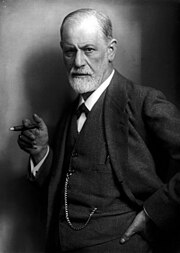
Freud

Sigmund Freud, pionnier de la psychanalyse, est né le 6 mai 1856 à Freiberg, Moravie (Autriche, aujourd'hui Príbor, en République tchèque).

Deux plaques commémoratives rappellent son séjour à Paris en 1885-1886. Après ses études de médecine, Freud décide d'aller étudier auprès de Jean-Martin Charcot, qu'il admire. Il s'installe à Paris et rencontre Charcot pour la première fois le 20 octobre 1885. Il se propose de traduire ses écrits en allemand. Charcot le remarque et l'invite à ses somptueuses soirées du faubourg Saint-Germain. Freud quitte Paris le 28 février 1886. Il cite ce séjour à Paris comme moment clé de son existence, et reste en contact épistolaire avec Charcot.
Il meurt le 23 septembre 1939 à Londres.

Sigmund Freud, born 6 May 1856, was an Austrian neurologist who founded the discipline of psychoanalysis.

Two plaques mention his stay in Paris in 1885-86, when he was studying with Charcot. In October 1885, Freud was granted a felllowship to study with Jean-Martin Charcot, a renowned neurologist who was conducting scientific research into hypnosis. He later recalled this stay as catalytic in turning him toward the practice of medical psychopathology and away from neurology research. He died in London, 23 September 1939.
Sigmund Freud
Plaque: 10, rue Le Goff, 75005 Paris
Sigmund Freud
Créateur de la psychanalyse
habita cette maison
1885-1886
Sigmund Freud,
creator of psychoanalysis,
lived in this house
1885-1886
Plaque: 5, imp Royer Collard, 75005 Paris
Au cours de son premier séjour à Paris en 1885, Sigmund Freud résida dans cet hôtel alors appelé Hôtel de la Paix.
During his first stay in Paris in 1885, Sigmund Freud lived in this hotel, then called Hotel de la Paix.


Wikipédia fr:Sigmund Freud
Wikipedia En:Sigmund Freud
Copyrights: Images hotlinked from Wikipedia Commons retain their licences. All other pictures are CC-BY-NC-SA, Serendiparis, 2001-2012

Saturday, May 5, 2012

Eugénie de Montijo

Eugénie de Montijo, née le 5 mai 1826 à Grenade en Espagne, a été impératrice des Français du 30 janvier 1853 au 4 septembre 1870, en tant qu'épouse de Napoléon III, empereur des Français. Une plaque commémorative sur la façade de l'hôtel Intercontinental garde le souvenir de ses passages à Paris, le dernier quelques mois avant sa mort à Madrid, le le 11 juillet 1920.

Eugénie de Montijo was born in Grenada, Spain, on 5 May 1826. Being the wife of Napoléon III, she was Empress consort of the French from 30 January 1853 to 4 September 1870. A plaque can be seen on the front of Hotel Intercontinental, where she stayed during her frequent visits to Paris, until a few months before she died in Madrid, on 11 July 1920.
Eugénie de Montijo
Plaque: 3, rue de Castiglione
Chaque année, lorsqu'elle
traversait Paris,
l'impératrice Eugénie
demeurait en cet hôtel.
Elle y accomplit
son dernier séjour
en décembre 1919.
Every year, when Empress Eugénie
came to Paris,
she lived in this hotel.
Her last stay
was in
December, 1919.


Wikipédia fr:Eugénie de Montijo
Wikipedia En:Eugénie de Montijo
Copyrights: Images hotlinked from Wikipedia Commons retain their licences. All other pictures are CC-BY-NC-SA, Serendiparis, 2001-2012

Tuesday, May 1, 2012

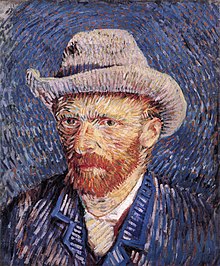
Vincent Van Gogh

Le 1er mai 1857 le peintre Vincent Van Gogh naissait à Groot-Zundert, aux Pays-Bas. Vincent et son frère Theo – qui était aussi son marchand – ont habité à Montmartre, où une plaque commémorative garde leur souvenir. Vincent Van Gogh mourra le 29 juillet 1890 à Auvers sur Oise.

The painter Vincent Van Gogh was born in the Netherlands, May 1st, 1857. For about two years he and his younger brother Theo, who was also his art dealer, lived in Montmartre (see plaque). Vincent died in Auvers sur Oise, July 29th, 1890. 
Plaque: 54 Rue Lepic, 75018
"Dans cette maison,
Vincent Van Gogh
a vécu
chez son frère Theo
de 1886 à 1888."
"In this house, his brother Theo's place, Vincent Van Gogh lived 1886 – 1888."


Wikipédia fr:Vincent Van Gogh, Theo Van Gogh
Wikipedia En:Vincent Van Gogh, Theo Van Gogh
Self-portrait from Wikipedia Commons